

Critical Point #8 - 27 Oct 2025
Italy’s failed deportation plan. Climate refugees from the Pacific. AI investment boom.


Good morning (afternoon, evening), this is the 8th edition of Critical Points, our roundup of key links and stories designed to help you navigate the current economic, political, technological, and social landscape.
This week we talk about:
📣 Italy’s plan to deport migrants to Albania
👩⚖️ On August 1, the European Court of Justice rejected the Italian government’s plan to send 3,000 migrants per month, for five years, to camps in Albania while awaiting a decision on their status.
🤷♂️ According to the Court, a country cannot arbitrarily decide which countries are “safe” and must provide evidence of respect for fundamental rights for the entire population.
🤦♀️ The plan had been virtually operational since October 2024, but from the outset, Italian courts had ordered the return to Italy of migrants taken to Albania. In response, the government had bypassed the courts through a decree-law (executive order).
🇪🇺 In 2024, von der Leyen had welcomed the agreement positively, and several EU governments had expressed interest in similar measures.
⚠️ Why this matters
The plan, closely eyed by many European governments, was approved in late 2023 in a context of general tightening of immigration laws at the EU level. One year later, at the time of the first collective “pushback” to centres in Albania, the plan was proposed again as a possible strategy to be adopted at the EU level to externalise the control of migration flows. While the backbone of EU immigration laws doesn’t seem to be in line with international law, such discursive framework is shared by almost all political forces.
📑 Dig deeper
📌 The European Court of Justice, consulted by Italian magistrates on the definition of “safe country” to be adopted in European immigration legislation (the case was brought before the Court by two Bangladeshi asylum seekers who had been deported in Albania)
👉 https://www.politico.eu/article/eu-court-giorgia-meloni-reject-asylum-seekers-italy-albania-migration/
👉 https://www.reuters.com/world/asia-pacific/eu-court-rules-against-italy-albania-migrant-camps-scheme-2025-08-01/
📌 A report by Tavolo Asilo e Immigrazione, an Italian coalition of organisations working in the field of international protection, reports that at least 132 people were picked up by police during the night, handcuffed with cable ties, and transferred from temporary detention centres to the Gjader centre in Albania, without any written order or justification:
https://cir-rifugiati.org/2025/07/25/tai-ferite-di-confine-la-nuova-fase-del-modello-albania-presentazione-del-rapporto-sulle-visite-di-monitoraggio-nel-centro-di-gjader-in-albania/
📌 The agreement differs from those signed in the past with countries such as Turkey and Tunisia, and also from the UK’s failed “Rwanda program,” in that it moves the EU asylum procedure outside its borders, but without transferring jurisdictional responsibility to the third country, instead creating an Italian enclave on Albanian territory.
https://verfassungsblog.de/offshoring-asylum-the-italian-way/
📌 In the second half of 2024, 15 EU countries (including Denmark, Italy, Austria, Poland, and the Netherlands) proposed plans to deport migrants to third countries, with the support of European Commission President Ursula von der Leyen. Germany, which was opposed at the time, now supports the plan.
https://on.ft.com/4o147uX 🎁
📣 Migration from the Pacific islands
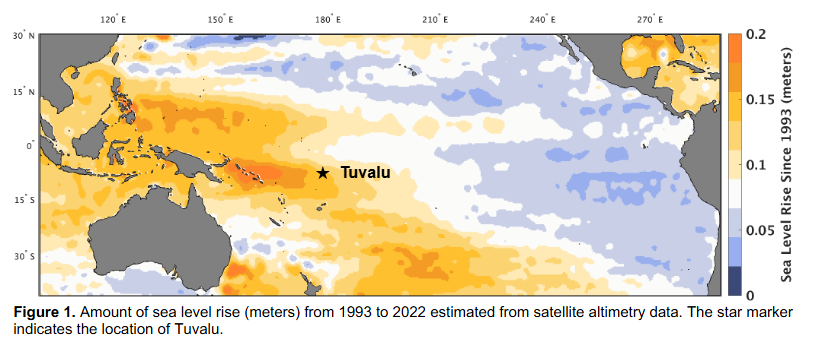
🚨 Tuvalu, an island state in the Pacific, could be the first to plan the migration of its entire population (11,000 people) in response to climate change.
🌊 The average altitude of Tuvalu is 2 m above sea level. According to a NASA study, in 2023, the sea level in Tuvalu was 15 cm higher than the average recorded in the previous three decades.
🧳 In 2023, Tuvalu and Australia signed the Falepili Union treaty, which provides for the selection of 280 citizens to be relocated. Nine thousand people signed up.
🇺🇳 Tuvalu’s UN representatives proposed an international treaty to maintain maritime borders even in the event of coastal submersion, the establishment of a digital nation without geographical territory, and an international treaty against the proliferation of fossil fuels.
⚠️ Why this matters
For some nations, climate change poses serious immediate existential risks. Such nations are more proactive in proposing more radical solutions to address the causes of climate change, but their initiatives lack the power to produce political effects unless they can obtain the support of major geopolitical powers, which is far from the current situation.
📑 Dig deeper
📌 The issue summarised by Wired
https://www.wired.com/story/the-first-planned-migration-of-an-entire-country-is-underway/
📌 The website of the Rising Nations Initiative program supported by the UN Center for Climate Mobility
https://climatemobility.org/initiatives/rising-nations/
📌 The NASA study that provides technical support to the Rising Nations Initiative (RNI) program. The sea level rise predicted by 2050 is between 20 and 30 cm compared to 2005. Much of the territory and critical infrastructure will be below high tide level, with a significant increase in the frequency and severity of flooding (over 100 days per year).
https://zenodo.org/records/8069320
📌 The Falepili Union Treaty between Tuvalu and Australia
https://www.dfat.gov.au/geo/tuvalu/australia-tuvalu-falepili-union-treaty
📌 The Australian Commission’s press release announcing the level of participation in the lottery
https://www.facebook.com/story.php?story_fbid=1134223728753231&id=100064968422794
📌 Speech by Feleti Teo, Prime Minister of Tuvalu, at the Third UN Conference on Oceans, held in Nice in June. Teo proposed an international treaty on sea level rise that recognises the legal rights of affected states and populations, including the principles of state continuity and permanence of maritime boundaries.
https://estatements.unmeetings.org/estatements/14.0496/20250609150000000/znakJJ-n/FdcwxFFlGPWF_nce_UNOC25_en.pdf
📌 Various statements by representatives of Pacific countries at the UN Conference on Oceans
https://www.rnz.co.nz/news/pacific/563807/tuvalu-calls-for-sea-level-rise-treaty-at-un-oceans-conference
📌 On the initiative to create a digital nation in the face of the possible loss of Tuvalu’s territories
https://www.bbc.com/future/article/20241121-tuvalu-the-pacific-islands-creating-a-digital-nation-in-the-metaverse-due-to-climate-change
📣 The scale of AI investment
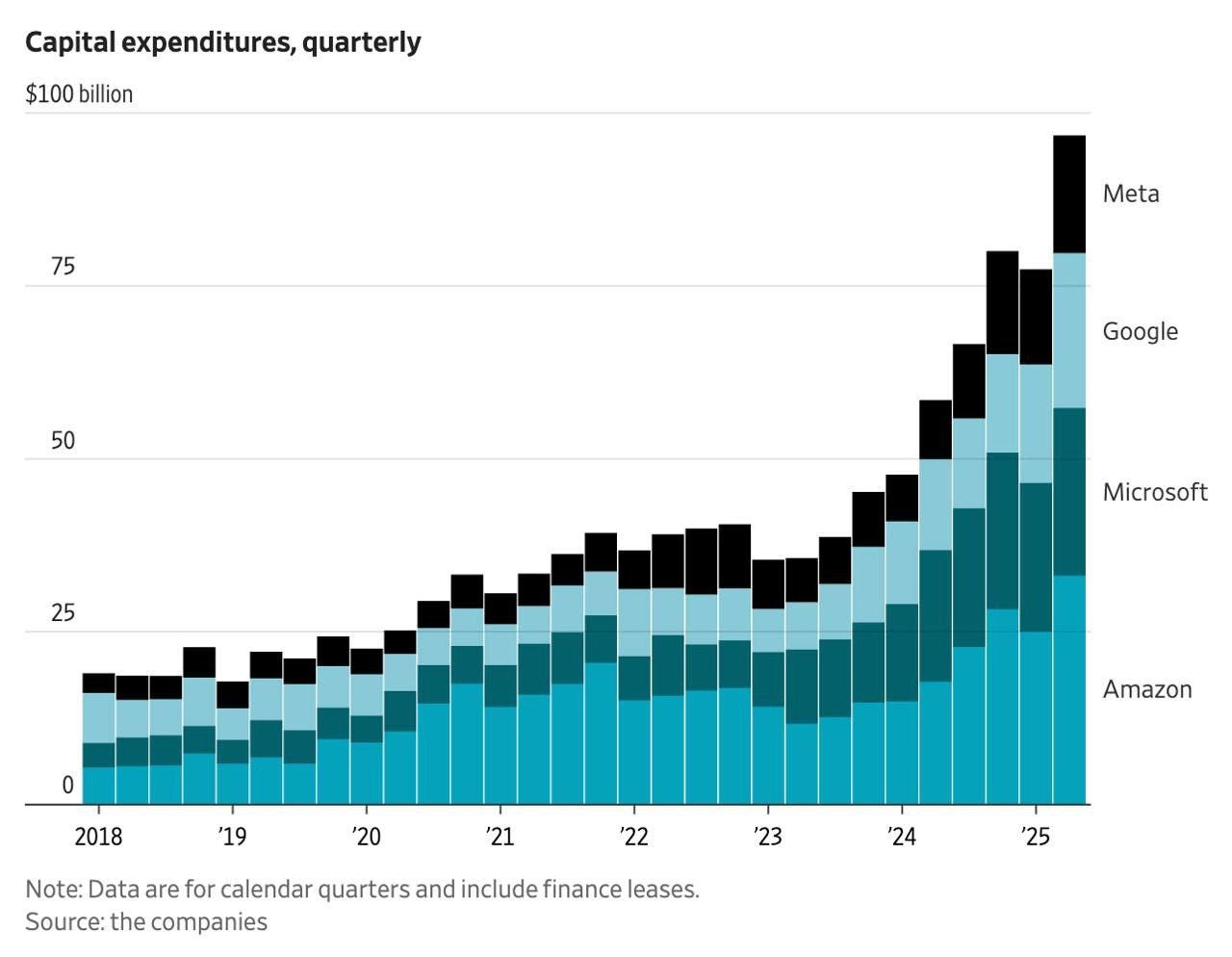
💸 With ~$100 billion in the first quarter of 2025, Amazon, Google, Meta, and Microsoft’s investments in data centres for AI development have reached historic levels.
📈 The annual projection exceeds $500 billion in investments, equal to at least 1.2% of US GDP, without considering the effects of related industries.
📊 The only two historical precedents for infrastructure investments on this scale are the internet boom in the 1990s and early 2000s (1-1.2% of GDP) and the birth of the railroad in the 1880s (6%).
🤯 These investments are estimated to contribute to a 0.7% increase in GDP in 2025. This contribution alone exceeds the total private consumption of the entire US population.
👀 Since growth for the second half of 2025 is estimated at 0.5%, without AI investments, the US would be in recession.
⚠️ Why this matters
The investments in the tech sector, driven by AI, and especially the infrastructure investments for data centres, have reached a scale that is now the largest economic factor in the US, the world’s largest economy. This has relevant implications for the political weight of tech giants and the financial sector.
📑 Dig deeper
📌 An article in the Wall Street Journal gives an idea of the enormity of AI spending. $100 billion is several times more than a regular European state budget law, and it is being spent for just one quarter:
https://www.wsj.com/tech/ai/silicon-valley-ai-infrastructure-capex-cffe0431?st=SRPBaR&reflink=desktopwebshare_permalink
📌 An article by Paul Kedrosky, a researcher at MIT, investor, and columnist, in which he uses different data to make the same point. Kedrosky defines the AI investment boom as a “private stimulus package for the economy” that hides the emerging problems of the US economy:
https://paulkedrosky.com/honey-ai-capex-ate-the-economy/
📌 The peak of investment during the dot-com bubble, which gave the first boost to the internet:
https://www.frbsf.org/wp-content/uploads/er19-34bk.pdf
📌 Further information and the importance of this boom on the financial sector can be found in this article by Noah Smith.
Insightful. That line about 'a country cannot arbitrarily decide which countries are "safe"' perfectly encapsulates the core issue. It's troubling how many EU governments where eager to follow this path. Thanks for highlighting the implications and the ECJ's crucial intervention.