

The Power Struggles Inside Global Health
Interview with Meri Koivusalo


Welcome to Phase Reading, our monthly format where we explore a global trend in politics, technology, economy and society, or all of these together, when we want to follow the longer threads behind the news.
Today, we talk about global health and social policy with Meri Koivusalo. Meri is Professor in Public Health at Tampere University in Finland, Principal Investigator at Tampere’s Center for Global Public Health Research and Training, and a member of the leadership team of the Global Health, Work, & Environment research community. Her research examines global and transnational health policy, health systems, trade, commercialisation, and the political economy of health. She has published more than a hundred articles on these topics and authored the book Making a Healthy World: Agencies, Actors and Policies in International Health with Eeva Ollila. She is also Co-Director of the WHO Collaborating Centre on Health in All Policies and the Social Determinants of Health. Throughout her career, she has worked at the intersection of research and policy with bodies including the Finnish government, the European Commission, United Nations Research Institute for Social Development (UNRISD), and international NGOs. Meri shares her thoughts and professional activities on LinkedIn and Bluesky.
We are always looking for emerging trends, local developments, research, industrial shifts, and overlooked dynamics.
If you work on these issues, or track them closely, get in touch.
Reach out by email or direct message.
In the conversation, we discuss:
Global health space and commercialisation
Giulio Fatti: Let me start with a general introduction. Where are we in the health space globally? What is the contribution of politics at the global level with multilateral institutions like the WHO? And what is the role of technological advancements such as drug discovery? What is the role of finance and so on.
Meri Koivusalo: I think that, globally, health and health policy are in an uncertain space, with actors moving in and out as people may have seen in the news. Geopolitics has not prioritised health, in practice, and health is also used to move some agendas further. For example, you can see this taking place in reproductive health and rights.
We actually had a quite good global health situation some time ago: hunger was decreasing, child mortality was decreasing, as HIV/AIDS. We were moving towards a state where things were improving. Some aspects were already changing before the pandemic, but then the pandemic came on top of everything else, and I think that has affected the global policy space. Thinking about the important discussions and debates related to global health, intellectual property rights, access to medicines, and R&D for innovations. Unfortunately, if you look at those, there hasn’t been that much change. I mean, there must have been a lot of fluff on the tariff side. But if you look at the IPR (intellectual property rights), then there hasn’t been that much movement.
Another thing has been taking place: when the US has left the WHO and the health debates, the EU has taken up the role of mediator with the industry and R&D, which has started to look like a hardening of the EU stance in this respect. Moving more to the industry scene helped us get the feeling for economic growth and for European industries to move in, rather than something that we need to think of as an important area for Member States. In that sense, I think there has been this process, not explicit or totally hidden, of commercialisation with regard to health systems. It’s not been a planned policy, but it’s become sort of evident because governments invest in the commercialisation of different aspects of healthcare, and they want to enhance growth.
When commercialisation starts to drive your goals, your actions, your measures and what you promote become driven by commercial interests rather than public health.
So I think that’s what takes place especially in high-income countries, and that’s a European, and I suppose a UK dilemma, how to currently deal with it. At the same time, the US pressure regarding tariffs and trade-related issues has been about deregulation, including environmental and health regulations. Regulation is heavier in the EU and is seen as something hindering innovation and R&D. Innovation has become a word used to enhance R&D but also to enhance all sorts of interests, which are not necessarily as clearly pro-health as one might think.
GF: OK. So when you say commercialisation, if I get it right, you mean basically what’s been happening, in Europe for sure, in the last, let’s say 30-40 years, that is privatisation of healthcare.
MK: Well, privatisation to some extent, but actually in Europe, for example in Germany you’ve got lots of private health insurance providers, and only then you’ve got social health insurance. In the Netherlands you’ve got private insurance providers. In many countries you’ve got private providers, but they’ve not been operating in a commercially oriented way, not necessarily proactively looking for new markets and engaging in commercial development. Now you rather have a commercialisation of those private operators: you’ve got actors such as private equity coming into the pharmaceutical industry.
GF: Good clarification, thank you.
MK: Health systems, for example in France, in a big way within the healthcare system, but also in the outpatient services areas where you didn’t think there would be a scope for private equity or enough interest for private equity to come in. So, that’s one aspect. I think the other aspect that interests me is to what extent there is a situation where commercialisation brings with it the enshittification of services. When commercialisation starts to drive your goals, your actions, your measures, and what you promote become driven by commercial interests rather than public health or wider health-systems-related issues.
I’m concerned with preventive services because there’s lots of emphasis on prevention, with governments spending only 5%, if not less than 5%, of healthcare spending on preventive services. Now you could engage with new AI-led products or other ways of promoting preventive services through data apps gathering different incentives for people to live in a healthy way. That can sound great for people who are within the government or the Ministry of Finance. Let’s spend money here… but at the end of the day, what they’re offering might not be all that different from what we already have on health education. So you add this kind of AI dust, gold dust to the quite standard individual behavioural strategies, while building up costs of the health system as a whole. So, my concern in the current phase would be that commercialisation is not just about health services, but is also important in determining the new areas that can be brought in.
Grasp the material reality behind the news cycle.
Subscribe to phase:shift to see the signal behind the noise.
Geopolitics and health
Piero Lo Monaco: That’s clear. I have a small follow-up question. You mentioned that typically geopolitics doesn’t take health seriously. Something that strikes me is that usually demography, in contrast, tends to be really a topic in geopolitical discourse. I was wondering, why is that? Why doesn’t geopolitics take health seriously, not only in terms of, for example, the drug supply chain, which of course has economic consequences and implications, but really from a health perspective? Why isn’t health a geopolitical topic? Shouldn’t it be, considering that many social consequences are related to this? What are they missing in general in the field of geopolitical analysis?
MK: Well, I think - of course that’s just my opinion - that there is a strong geopolitical analysis on health security or pandemics and related aspects. I just don’t see that as dominant. I don’t see the investment. I see some efforts by the pharmaceutical industry to expand the notion of what is understood as security. With the European Critical Medicines Act, you can see that there is pressure to include different products as part of wider security policies. But I don’t see that actually going to ensure the health systems function, that there is resilience in the health systems or recognition of their role. I don’t see that kind of input taken seriously. International cooperation on health is not seen as an important factor.
In contrast to what people tend to say about the multilateral agencies - about WHO for example - after the pandemic, people realised that actually a lot of governments appreciate the fact that you have a shared forum, which is based on member states and not owned by one country or one financier. There is a space where all governments can bring up their questions, and which has a technical role in following up. Even the United States, which left the WHO because of Trump, US is still a member of PAHO, and as far as I understand, Argentina is also a member of PAHO. So you’ve got this paradox, in terms of talks and attention and then what governments actually do and what they consider as relevant. There is something really strong in terms of the Global Health Cooperation, which is much more important than geopolitics or any bloc thinking or the huge emphasis on power differences between different blocs. I think that much of that is a debate across equals in healthcare. When Ministries of Health are engaged in the WHO and talk to each other, they know that they deal with similar issues. They’re not in a position of donor and recipient on many questions, they deal with common concerns.
In many countries you’ve got quite a high level of expertise in some infectious diseases, low- and middle-income countries have more than high-income countries on particular topics. So, you’ve got this shared reality in a way that helps people to deal with health problems. That can, of course, become broken by some of the politics which emerge through the priorities or engagement with the pharmaceutical industry or related interests, but I see a strong potential in terms of understanding common interests in health and public health.
PL: So is it a lack of awareness?
MK: It might be a lack of awareness, but sometimes I think there are also different political priorities that people don’t foresee that one should be thinking about. Geopolitics is about foreign policies. People have been taught that health policies are not part of foreign policies. For example, in Finland - where I come from - it’s been a struggle to relate to that. So, in foreign policies, governments very often don’t see health issues as primary foreign policy issues: they see primary foreign policy issues such as trade and conflicts and related matters, which then dominate the agenda.
Holistic approach to health
GF: In several publications, you have argued that the implementation of a well-functioning health system should be rooted in a more holistic approach linking health to social and environmental determinants. Can you tell us more about this and about the current consensus on public health in policy environments?
MK: I think that there is a current consensus that health services can’t really improve many determinants of population health, but they are important when people fall ill. So, if you want to improve life expectancy and health, you also need to act on the circumstances, the place where people live and what they eat, what they drink, how they behave, and that leads you then to think about the social and commercial determinants of health. A recent WHO report on social determinants of health equity highlights this situation, emphasising all the commercial interests shaping the environment, how and where people shop, where they consume things, and how their diets are constructed. So, I think that within the public health community there is an understanding of this but also different priorities. If you think about policy-making, there tends to be emphasis on the health systems and services as the core issue. So, people recognise that health is determined by these other factors, but they still need health systems when they feel ill, and they feel that that’s somehow part of Social Security. They need the sense that if one falls ill, then they have access to a healthcare system. That’s appreciated very highly. For example, in most European countries you can take drinking water for granted, but if we were uncertain about our drinking water and had to boil it every day, we would see more clearly that the immediate environment is affected more strongly than what you’re inclined to think.
PL: I see. I have another question, regarding the cuts that have been affecting a few countries in the last couple of years, including the US, Germany, and Northern Europe that were cutting foreign aid to developing countries. Can you tell us about the impacts on health?
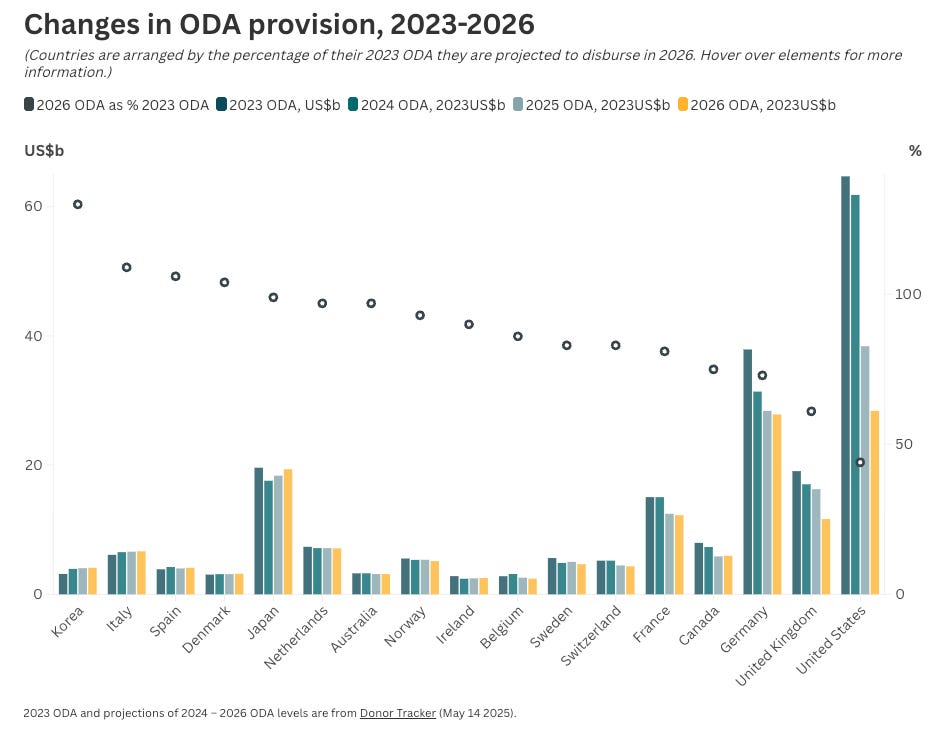
MK: There have been real cuts in the global health space, and you also see the difference in terms of multilateral organisations, some of which have been funded mostly by USAID, and which are now in much more trouble than specialised agencies like WHO or ILO, which have not been distributing that much aid money. It’s not unprecedented for the US to cut USAID contributions. Very often they have cut reproductive health spending, and European member states have come to replace that. But this time it is different, the cuts are so big that there is no way to replace them. Also, the European cuts to overseas aid, with Germany, the UK, and France as the major ones, have made the situation even worse. A recent Lancet study by Cavalcanti and colleagues has estimated that the cuts would result in a magnitude of 4 million deaths of children under five before 2030. However, I think it’s important to say that we don’t know how much of the stated cuts will be implemented and what remains to be confirmed. That’s why it’s really hard to understand where the situation is and anticipate where it will be in the future.
Unfortunately, health-policy-aware stances come from middle-income countries more than high-income countries.
But I think that we also need to ask how global health measures and health measures within countries are financed. In this respect, everybody was expecting that in the longer term you would ever have a shift in terms of the aid money because we’ve got lots of challenges with aid money and it would be preferable to do that differently. But we also need humanitarian action to respond to crises. So, there is a recognition that funding has been declining for some time, and this is partly because the environment, climate change, and other needs have become more appealing. There used to be huge funding for HIV/AIDS. So there’s a recognition that probably health is not going to last that long, but at the same time there is a worry that the situation is dire, and it’s really hard to see that changing soon.
PL: You mentioned that health is being used to reshape multilateral balances in the global stage. This reminds me, of course, that after the cuts to USAID, there was quite a lively debate in Africanist Studies on whether this would be the occasion for African countries to take the lead regarding health policies and start to build something rooted in the African economy, rather than depending on assistance from outside. Just a few months later, the US government contacted several African countries to request permission to use health data from their populations. This was basically used to push on them a transactional type of agreement. Do you have any comments on this?
MK: My understanding is in the same ballpark as yours. In terms of information gained, I think that there were expectations that the US would not continue the cuts and that some countries also thought: data are not a problem.
But they’ve now realised what kind of contracts they’ve engaged with, and that’s also connected to pandemic negotiations where there is a clear conflict between the EU stance and other countries’ in terms of benefit sharing. So yes, I think that there’s been reflection, and maybe surprise as well, but considering the last year, one shouldn’t be surprised by the US transactional approaches anymore. It is interesting that you have pandemic agreements and perhaps negotiations on pathogen access and benefit sharing where Europe is toeing quite a hard line while the US is making these contractual arrangements to ensure its interests in safeguarding itself vis-à-vis these countries.
So it somehow feels quite sad, it feels as if the global health interests in both the EU and the US are just selfish, rooted in the interest of the pharmaceutical industry or its related activities, and less informed by global health needs. That has been a problem in all of the TRIPS negotiations. In the pandemic and waiver negotiations, the EU was pretty much articulating stances for the industry and not necessarily the public health views. Had it set articulated public health views on the pandemic, it would have been totally different. And I think that’s the problem, that in the foreign policy and in the pandemic agreement negotiations, I think that commercial policy stances seem to matter more for European Union.
On questions relevant to pharmaceutical policy and commercial interests, unfortunately health policy and public-health-aware stances have been articulated by middle-income countries more than by high-income countries.
If you know someone in research, policy, academia, or industry who could use our work, share phase:shift with them.
Be part of the early network.
Health weaponised by politics
PL: What do you think is the impact of right-wing politics on public health discourse practices and policies? How does it reshape multilateral institutions and aid institutions?
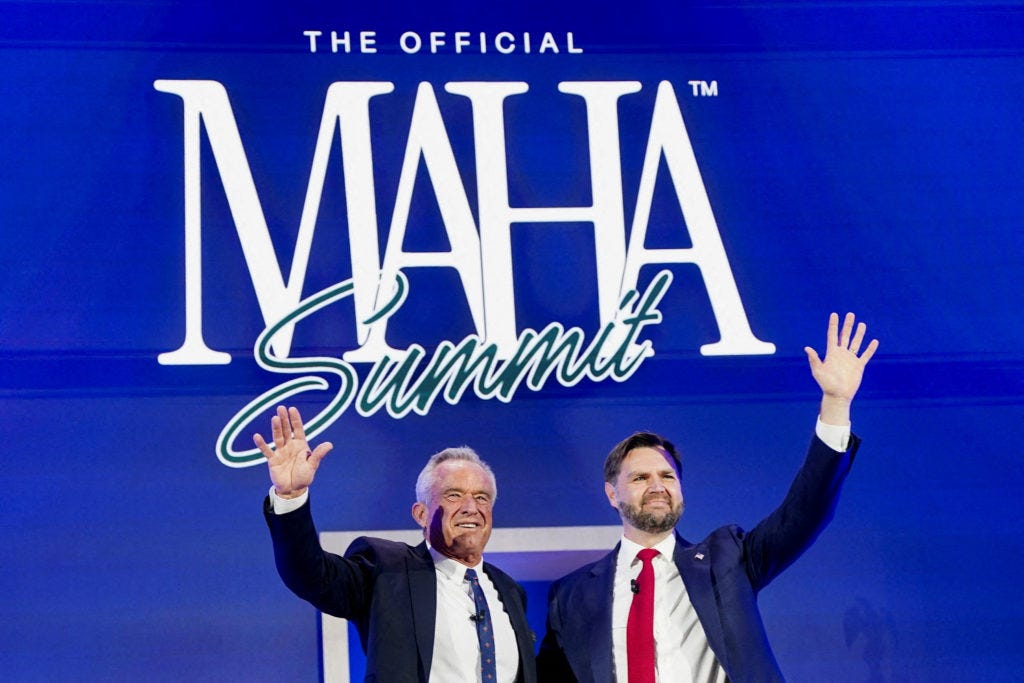
MK: First, I think that it’s important to say that anti-vax is not the right-wing stance. It shouldn’t be. It’s currently used by certain alt-right stances to promote themselves. I don’t know their policies, but being anti-vax shouldn’t be particularly right-wing.
Usually, if you think about their politics, historically, then vaccines would have been favoured because vaccines were kind of cheap and easy to reach, and they are value for money. In that sense, anti-vax positions didn’t need to be a right-wing thing. That is something particular about the current politics of the alt-right. They use it to meddle with and undermine international expertise.
There is also the question of what the government should do. Where the government should engage and where it should be limited. You have an emphasis on behavioural aspects of health: individual health is an individual responsibility and depends on your own choices. Your free choices and your behavioural actions, with emphasis on fitness and physical activity and the diet that you choose yourself.
The second is the emphasis on win-win solutions: traditional right-wing policy is that you promote industry stances that are pro-health, and you support health, but only through the private sector. In right-wing parties, you’ve got the difference between the social liberal and economic liberal parties, which see competition in health services and commercialisation or marketisation as means to improve services.
Then you have these socially conservative actors, more prone to issues about social and reproductive rights, transgender issues and related questions. I think that there was never a phase when anti-vaxxers were so prominent, but currently they blend arguments from different backgrounds, and I find it interesting that there are lots of Bill Gates-related arguments. Some of these arguments have been recognised as a genuine problem by a wider community, but many of the issues are combined in a way that forms a story, a story that very often is twisted. So when people read it, they can recognise these arguments, but the story is not quite right.
GF: If I understand what you’re saying, the anti-vax posture is basically a naive and possibly misdirected proxy for “anti-Big Pharma”, and this is weaponised by the right to score political points.
MK: In some sense. My worry is that anti-pharma sentiments are weaponised through the articulation of anti-vax, which then focuses not on the actual problems with Big Pharma, but on totally different back issues by legitimating other sides of it. So, to some extent yes, but I don’t think there’s only that. For example, I don’t know if it’s all naive, some may be naive and some may not. We shouldn’t say that any doubts about vaccines are awful and should never exist. Some vaccines are not as good as others, and we should have a critical assessment of anything you give to the larger population. We also have a question in terms of vaccine access, in terms of pricing - which first came with HPV vaccines, where they started to have patents on the vaccines. The effectiveness of some of the influenza vaccines was quite bad and poor for a long time, and even now it differs every year, and many people are not keen on taking them. All these aspects influence how people relate to vaccines.
No, my worries are that if vaccines become corporatised, there is an incentive to push vaccines for everyone. I’m not concerned about children in the US not getting COVID-19 vaccines, because not all children in Europe, or at least in Finland, are getting COVID-19 vaccines. It’s not considered the age group that requires them.
I think there are more nuanced issues behind this topic, but then the problem is that anti-vax becomes the way of channelling anti-pharma sentiments, as people have critical views of the actions of pharmaceutical companies or of the high prices of medicines in general.
Health, social security and labour movement
GF: Yes, it makes sense. I want to circle back a little bit to the topic that we were discussing earlier. The relationship between health and the broader social environment. The United Nations, I believe, recognised 30 years ago that human security comes from 7 intertwined domains: economic, food, health, environmental, personal, community, and political security. Health is just one of these seven domains, and yet it does not really seem to me that the relationship between these domains is really covered at all in the public discourse.
You’ve done work on the impact of job security on health, in particular, in your article on the condition of Uber drivers, and I wanted to focus a little bit on the relationship between labour and health. As far as I can see, these are treated as completely separate domains. There is job security, and then there is health security. How do scholars and health operators deal with this topic? Also, if we eliminate little health issues coming from job insecurity or labour insecurity, do we have a ballpark figure of how that would impact healthcare expenditure?
You’ve got fewer and fewer people who are salaried and more and more project-based, fixed-term contract-based people, and they’re moving more and more risk to your plate. In that sense, academic workers are actually much closer to Uber drivers than you would think.
MK: That’s a good question, as it makes you think about the rest. I think that currently the definition of how healthcare expenditure is formed is not as clearly linked to the conditions within which people live, so health expenditure does not increase because people are more ill but because treatments are more expensive and these accumulate so, in some sense, the cost of the the healthcare system can include costs of elderly care through very expensive treatments, costs of technology and information systems.
If you think about eliminating employment-related healthcare costs, then those might not have as big an impact on healthcare costs as such. But where you could have an impact is what has been called deaths of desperation, from overdoses, suicides and alcohol - and I think that’s been seen in the US - which might relate to cascades of stress and related conditions. I would argue that you may not see an impact from stress.
And the problem sometimes is, although you might not be that kind of person, the problem is that a lot of times there are people who say “OK, we could save some healthcare costs if we would kind of act on this and that”, which makes me react in a strong way.
Because we can’t remove the healthcare system. It’s still important when we fall ill. It’s easy to claim that apps and different kinds of AI things can help people stay healthier, which would make healthcare costs lower. But I think that could be a false claim. If we want to provide security for people, and say, they get run over by a truck, there needs to exist a healthcare system to mend them again. So the question also makes me react strongly. One needs to be careful.
GF: Yes, I wasn’t implying that we shouldn’t have that system in place.
MK: But that articulation comes from somewhere else to emphasise that. But I think I didn’t answer the beginning of your question about the UN’s intertwined domains, did I? There are some interlinkages that you can see in the Sustainable Development Goals. I never thought Sustainable Development Goals would be in any way radical, but what you call the Overton window has moved, so that things that we may not have thought were radical are now perceived as very radical by some governments.
So we’ve been actually working through the Collaborating Centre on Health in All Policies and the Social Determinants of Health with the ILO and the WHO on social protection. That’s been interesting because you can see the links at a global level. For example, in the ILO you’ve got social protection-related work, which is quite close to health-related work. It may not be obvious, but behind the scenes there is a lot of ongoing work about occupational health and social protection-related activities at the global level.
I’ve got one point on Uber as well. We know that so far the platform work is not as prominent, but if you think about zero-hour work, then it’s one step further. These are a type of work precarity. So, you’ve got zero-hour work, and then you’ve got platform work, which is, by contract, based on an imagined partnership with the platforms and the couriers, for example in food couriers, or Uber drivers, which are anyway totally different. Talking about platforms as partners is just a way to avoid talking about employers. The danger of these platforms and the partnership discourse is that they move the responsibility further down the chain and somehow dismantle the social protection provisions that we’ve been able to put in place as a result of trade union work and as a result of wider policies. So this is undermining existing employment security more in general.
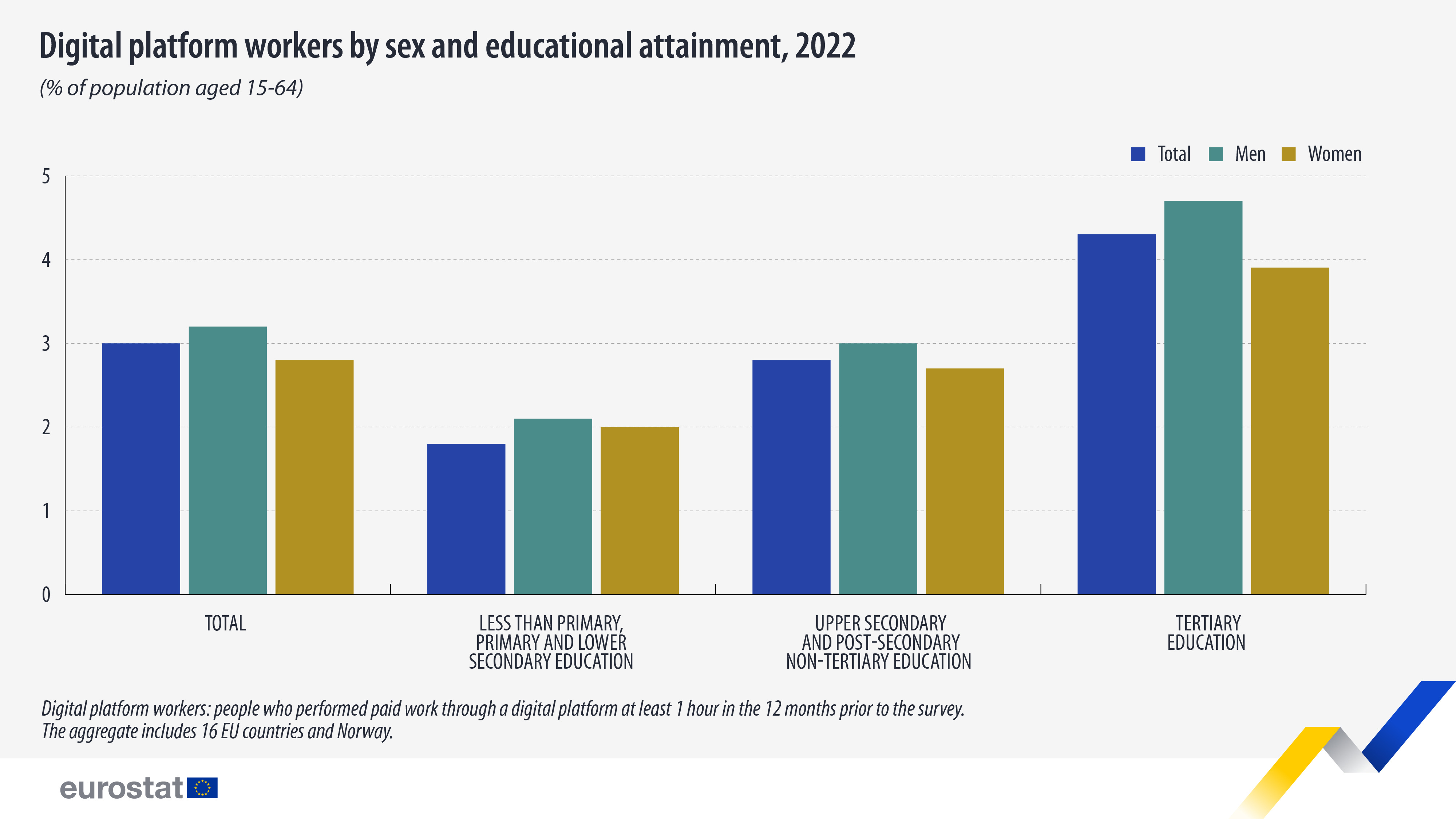
Through widening the focus on that model of work in low-income countries, actually some of the platform work could enable us to make social protection systems that work because you have data on what people have been working on. But somehow the platform companies have managed to use them as means to undermine rather than construct social protection systems. So I think that’s something that will hopefully change over the long term, and where different governments can move further in terms of a better understanding of what takes place in the context of platform work.
PL: You just mentioned trade unions and the role they may play in all of this. Did any trade union get in touch with you to get information, and maybe to set up a collaboration, or even sponsor research about this kind of thing? It definitely seems highly relevant to them?
MK: Yes. For the Uber study, we interviewed a lot of the European actors, and it was also good to see that there is constant campaigning with many of the trade unions on these issues. They’ve got their own research capacity to push the ideas further. We’ve been talking in some seminars, meetings and also interviews. A huge bunch of trade union representatives, as well as Bolt and Uber drivers, ministries of health and representatives of the EU were involved as part of negotiations on the Platform Directive.
We could have a wide view about the different actors and their positions, and I think that sometimes these are processes where both you and interviewees start to think differently. We managed to interview the European Commission, which was genuinely trying to move and do something with the Directive. It got watered down, but there was some initiative at least.
PL: This is a very good example of a bridge between research and social actors, and I think something relevant to the three of us in this conversation…
GF: When we were reading your papers, I couldn’t help but notice the similarities between researchers and couriers. It was striking, and, in a sense, mind-blowing. I think that there are obvious differences. Researchers are usually immigrants on a regular visa, but they’re high-level immigrants. They don’t risk deportation. They are proper employees, not partners, but it’s also true that they go through structural uncertainty. There is no job security, pay is not very high, and it was striking to me that Uber drivers are also highly educated, so probably the background is more similar than one would think at first sight, although I’m sure that social mobility is completely different. Do you have any insights on how these two domains compare?
MK: I think my insight is that every time we’ve been talking publicly about the platform economy and its consequences, people bring up universities and the situation in universities. So there must be something going on. And I think that in some sense we live in times where universities are applying similar methods. It’s not necessarily exactly the same, but you’ve got corporatisation of universities. Especially if you’ve been in the UK, you can see how the role of admin and vice-chancellors has grown within universities, while teaching and research staff have become increasingly competitive and precarious. That’s the model that unfortunately is being transferred to other universities across Europe. So you’ve got fewer and fewer people who are salaried and more and more project-based, fixed-term contract-based people, and they’re moving more and more risk to your plate. In that sense, academic workers are actually much closer to Uber drivers than you would think.
PL: High stress levels, yes. Mental health. I remember recent research showing that mental health is really an overwhelming issue in academia, much higher than the average.
MK: Yes. And I think that it’s the sense of that: you’re not controlling anything, and there are models actually on types of social stress and work which recognise the patterns and the ways in which people are currently working more is not very healthy.
Connect the local and the global, the technical and the political, the event to the system.
Subscribe to phase:shift: grasp reality, so you can change it.
The role of academics
GF: On a different note, in a publication that you co-authored for De Gruyter Brill, you stated: “Powerful actors such as states, corporations or influential individuals often possess disproportionate power, money, resources and influence, allowing them to shape the narrative and response in ways that may not reflect the needs or experiences of less powerful actors, obviously referring to healthcare”. My question is, how can intellectual work have an impact on this? Considering that intellectual work usually engages much more with those powerful actors than it engages with regular people.
MK: So you think that intellectual work is powerful? I’m not so sure if we are in a powerful position actually.
GF: I wouldn’t say so, but what I mean is that usually reports written by academics or scholars are not meant for normal people, but for powerful people who can, you know, decide to consider them or not.
MK: I think that’s also something that we need to think about: to whom we communicate as academics, because if you look at the current alt-right politics, there is a keenness to undermine academic expertise, reports, articles and knowledge in many fields, and bring up new kinds of experience and ideas. There is a competing issue, and we might need to think about how we bring things out and how we communicate them to other people.
I don’t think that you can with some leaders. The current US government has been very challenging to deal with, and it can be very hard to articulate academic or to relate research to public priorities. That is not a problem with academics, but rather within policymaking. One should try to think about how to engage with different groups, but I also think that academics have a particular role in talking truth to power because some people who are involved firsthand in public administration do not have the freedom to do that. I’ve worked with government officials, and it’s very hard for them to act because their hands are tied in terms of what they can express. So, that’s important, and you should be able to do that irrespective of your position. We shouldn’t be thinking too much that this is just a talk with people who have power, because I think that also there is an increasing push to say that academics are not powerful. They’re not that relevant, and I think that maybe we should reclaim the terrain of relevance in policymaking and influence.
PL: Yes, and start to see their own power.
Recommendations
GF: Thank you, this is a great point. We would like to end our conversation on a fun note. So do you have any recommendations, not necessarily related to this topic?
MK: I was thinking about a podcast by Nason Maani on health, which relates to some areas that we’ve been working with, called Money, Power and Health, available on Spotify. It relates to the UK, but I think it provides an interesting angle to that.
PL: We will surely listen to it.
GF: Yes, for sure. That’s amazing. Well, Meri, thank you so much. It was a great conversation.
PL: Yeah, thank you. I didn’t mention this at the beginning, but as a scientific editor, I also run journals that focus on public health, so it was also interesting to me, professionally: I learned a lot about how many things are at the interface between health and politics and society, all the implications. So thank you very much.
Editor’s note: Money, Power and Health is also available on Substack, and we wholeheartedly second Meri’s recommendation.
Bellissima analisi molto puntuale e chiara nella sua complessità! Proprio la mission di questa newsletter credo. Brav3!