

The Battleground for Autonomous Tech - Critical Point #37
EU-Morocco AI agreement. Military robots. Data centre discontent.


Good morning (afternoon, evening), this is the 37th edition of Critical Points, our roundup of key links and stories designed to help you navigate the current economic, political, technological, and social landscape.
If you find our content valuable, consider liking, restacking, or sharing our posts. It really helps support our work. We’d also love to hear from you: leave a comment to help us understand what topics matter most to you and how we can cover them better.
This week we talk about the new frontier of automation and its implications for society, politics and warfare. We talk about:
We are always looking for emerging trends, local developments, research, industrial shifts, and overlooked dynamics.
If you work on these issues, or track them closely, get in touch.
Reach out by email or direct message.
📣 EU–Morocco Agreement on AI Infrastructure
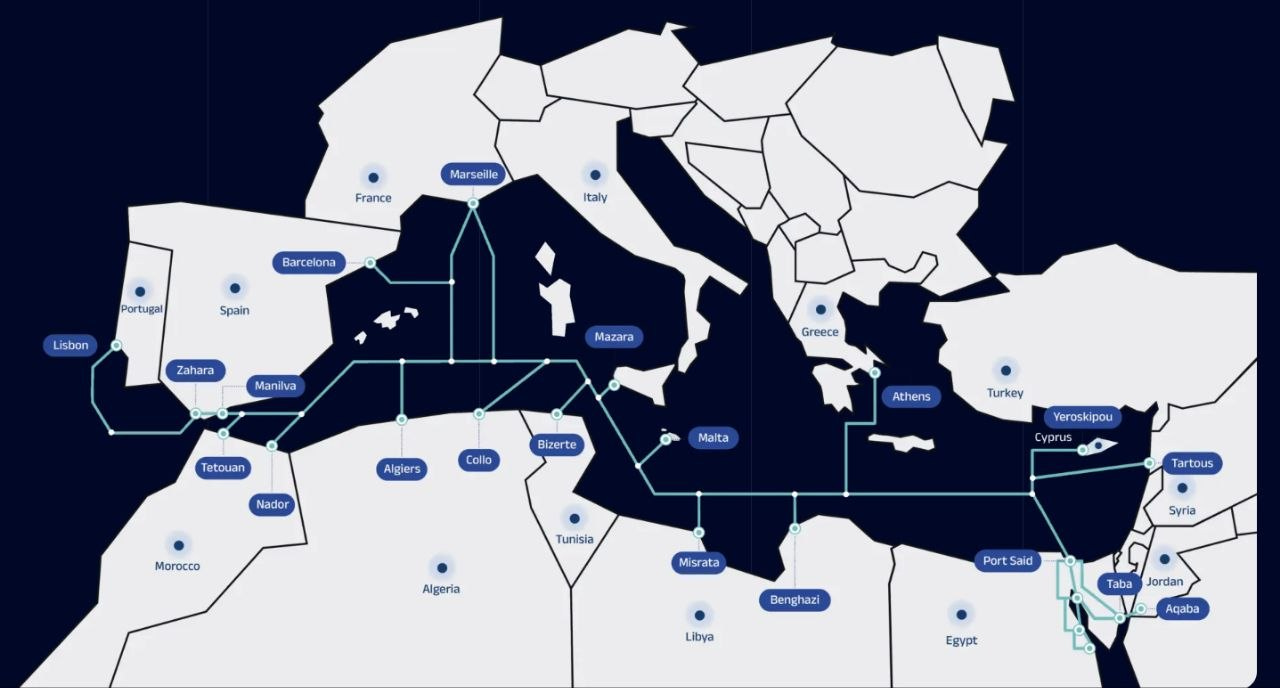
🇪🇺🇲🇦 In early April, the European Union and Morocco signed a series of statements of intent to strengthen cooperation on artificial intelligence and digital infrastructure.
🌐 The programme aims to promote collaboration between research institutions and AI industrial hubs based in the EU and in Morocco, and confirms plans to build a submarine fibre‑optic cable infrastructure linking North Africa with southern Europe, to be used for such collaborations.
🏭 According to the Moroccan government, the EU is also considering the construction of an “AI factory” in Rabat. Morocco is already planning the construction of a 500 MW data centre in the occupied Western Sahara.
🧐 While operational details remain limited, the initiative is presented as an effort to distinguish Europe’s approach from the U.S. model, focused on rapid innovation, as well as from the Chinese model, characterised by strong state direction.
🚀 The agreement follows recent attacks on data centres in the Middle East, which have increased interest in geographically safer partners such as Morocco, and comes a few months after the joint Franco‑German push for European digital sovereignty.
⚠️ Why this matters
The EU is exploring ways to build a more autonomous infrastructure for AI development and reduce its dependence on American AI services. Bringing Morocco into this ecosystem could, in principle, facilitate the construction of data centres serving European institutions and companies. Morocco, in turn, is using the opportunity to advance its 2030 AI strategy, which aims to generate $10 billion in AI-related GDP — in an economy currently worth around $170 billion — and develop a domestic tech ecosystem. However, from a technical point of view, as with all agreements of this kind, the key question will be implementation, which does not always follow the ambition of the announcements. Morocco has already become a major manufacturing hub and, in parallel, has seen several European governments recognise Morocco’s sovereignty over Western Sahara in recent years, revising their stance and moving away from the UN’s traditional position. If successful, the AI cooperation described above could position Morocco as a leading AI hub in North Africa and further reinforce this political and diplomatic rapprochement.
📑 Dig deeper
📌 The joint press release announcing the programme known as the EU-Morocco Digital Dialogue. It should be noted that these are still only declarations of intent. For example, as part of these agreements, four European supercomputing centres (BSC, CINECA, GENCI and LUMI) have signed a letter of intent to collaborate with Mohammed VI Polytechnic University, which houses the most powerful supercomputer on the African continent, once the Medusa cable is operational.
📌 The announcement was reported by African Business and European Interest (an independent European media outlet), which, from the Marrakech technology innovation fair (GITEX), quoted the Moroccan Minister for Digital Transition, Amal El Fallah Seghrouchni, as saying that the EU is interested in building an AI factory in Rabat.
📌 The Medusa Submarine Cable System, the undersea fibre-optic cable that would connect Morocco, Algeria, Egypt and Tunisia with Spain, Portugal, France, Italy and Cyprus, would be over 8,000 km long and include at least 19 landing stations, of which only those in Marseille (France), Bizerte (Tunisia) and Nador (Morocco).
📌 NVIDIA’s definition of an AI factory.
📌 Existing AI factories in the EU.
📌 We talked about Morocco’s manufacturing boom in our Critical Point #16. Morocco’s changing role in view of its regional ambitions was described in our very first Critical Point #1, where we noted that major European governments including France and Spain have recognised Moroccan sovereignty over Western Sahara. The U.S. did the same, in exchange for normalisation of Morocco’s relations with Israel.
Connect the local and the global, the technical and the political, the event to the system.
Subscribe to phase:shift: grasp reality, so you can change it.
📣 The Use of Military Robots in Ukraine

🤖 Since late February, Ukraine has intensified drone strikes across much of the frontline and significantly expanded the deployment of unmanned ground vehicles (UGVs).
📈 Within a year, UGV operations have evolved from rare and experimental missions to a routine element of military activity, with around 22,000 missions recorded in the first quarter of 2026, primarily for logistics and casualty evacuation.
🥇 In April, for the first time in history, a Russian position was reportedly captured using ground robots and aerial drones only, without direct infantry involvement.
🕊️ Earlier, at the end of March, another operation successfully secured the release of two prisoners using drones alone.
💥 At the same time, sustained drone strikes have damaged Russian oil infrastructure, reportedly disrupting up to 40% of export capacity and limiting Russia’s ability to benefit from higher global prices linked to the war in Iran.
💰 According to estimates from the Kyiv School of Economics, ground robotic systems represent the fastest‑growing segment of Ukraine’s defence sector (valued at at least $6.8 billion). Production of UAVs (valued at $6.3 billion) and UGVs (valued at $252 million) has increased by at least 137% and 488%, respectively.
⚠️ Why this matters
The rapid development of autonomous technologies is helping Ukraine minimise casualties and reduce its chronic manpower disadvantage. Ukraine has accumulated an increasing advantage in both UAVs for mid and long-range strikes and UGVs. Besides carrying larger payloads than aerial drones and offering a more stable platform for firing guns or rockets, UGVs are becoming a key logistics platform for resupplying infantry and evacuating wounded soldiers at the frontline, which has evolved into a drone-saturated killzone extending for tens of kilometres. Building on its rapid innovation cycle, Kyiv is using its position to sign agreements and sell drones to other countries and increase revenues for its military-industrial complex. Of note, while the scale of this in Ukraine is unmatched anywhere else in the world, the use of autonomous vehicles, especially drones, has become the norm in major conflicts worldwide, including those occurring within states and involving non-state actors.
📑 Dig deeper
📌 An article published in The Debrief traces the history of Ukraine’s progress in the development and use of military robots. By December 2024, an assault consisting solely of robots had already been tested, but on that occasion, rapid infantry intervention was necessary to hold the positions gained.
📌 An article places these developments within the broader context of the lack of international laws and regulations governing the use of autonomous weapons. On this topic, the same authors have written an analysis in a specialist journal. We have also discussed this in Critical Point #3.
📌 In November 2025, the BBC reported that up to 90% of supplies to frontline positions around Pokrovsk were being delivered by UGVs
📌 The report includes estimates from the Kyiv School of Economics. The Ukrainian defence sector is estimated at $6.8 billion. Drone production ($6.3 billion) is said to have grown by 137%, whilst UGV production ($252 million) has grown by 488%.
📌 Although their use on the front line has not been confirmed, two humanoid robots (Phantom MK-1 model) produced by the American start-up Foundation have been delivered to Ukraine for a field trial programme, for high-risk operations such as reconnaissance and explosive ordnance disposal. The company intends to lease the robots rather than sell them, with rental costs estimated at around $100,000 per year per unit.
📌 We talked about Ukrainian long-range strikes in Critical Point #23. Ukraine has also recently struck several refineries in the Urals, between 1,700 and 1,800 km from the Ukrainian border:
📌 In addition to refineries, Ukraine has damaged Russia’s main export terminals in the Baltic Sea.
📌 The attacks have damaged at least 40% of Russia’s oil export capacity.
If you know someone in research, policy, academia, or industry who could use our work, share phase:shift with them.
Be part of the early network.
📣 Political Risks for Data Centre Development

✋ One of the key risks to the development of AI infrastructure is growing political opposition to the construction of data centres, coming from both the right and the left based on concerns primarily linked to environmental impacts on local communities, as well as perceived threats to employment.
🗺️ A map produced by Interconnected tracks local moratoria on data‑centre construction, indicating the level at which opposition originates (citizen, municipal, county, or state), the duration of restrictions, and the geographical concentration of opposition, which can also suggest political patterns.
📍 As of May 2026, the map identifies 86 moratorium initiatives across 35 U.S. states. Of these, 60 have been adopted, 57 remain active, and 18 result from state‑level legislation, alongside 4 permanent bans.
🪧 Many moratoria stem from grassroots initiatives. Among the 57 currently active, most are set to last around one year, extending through 2026 or beyond, with a few cases extending into 2027.
⚠️ Why this matters
AI has the power to modify the organisation of labour in ways that are yet to be defined. Despite the impact on unemployment being muted, with unemployment extremely low by historical standards, constant doomerism from AI developers themselves has generated a harsh backlash against AI development. This is compounded by the negative effects that data centres can have on local communities in terms of pollution, noise, and load on the electric grid. Growing local opposition can hamper the development of computing power to develop more powerful models, and, if enough investments become unproductive, even curtail AI development altogether. A pop of the AI bubble would likely cause a recession.
📑 Dig deeper
📌 The interactive map with several infographics.
📌 The introductory article:

📌 A couple of Critical Points ago, we talked about the energy requirements of data centres as well as about the local opposition to the construction of data centres, which is creating a gap between Republicans. To read our issue on what data centres are becoming, read here:
📌The scale of investment in AI is such that the US economy would be in recession were it not for it. We talked about this in Critical Point #8: