

Capitalising on Instability - Critical Point #38
Internet in Iran. Turkey in Nigeria. Fertiliser crisis.


Good morning (afternoon, evening), this is the 38th edition of Critical Points, our roundup of key links and stories designed to help you navigate the current economic, political, technological, and social landscape.
If you find our content valuable, consider liking, restacking, or sharing our posts. It really helps support our work. We’d also love to hear from you: leave a comment to help us understand what topics matter most to you and how we can cover them better.
This week we talk about how crises can always become tools for increasing specific actors’ power, although this sometimes depends on material uncertainties that lead such attempts to fail. We talk about:
We are always looking for emerging trends, local developments, research, industrial shifts, and overlooked dynamics.
If you work on these issues, or track them closely, get in touch.
Reach out by email or direct message.
📣 Internet Access in Iran and IRGC Revenues
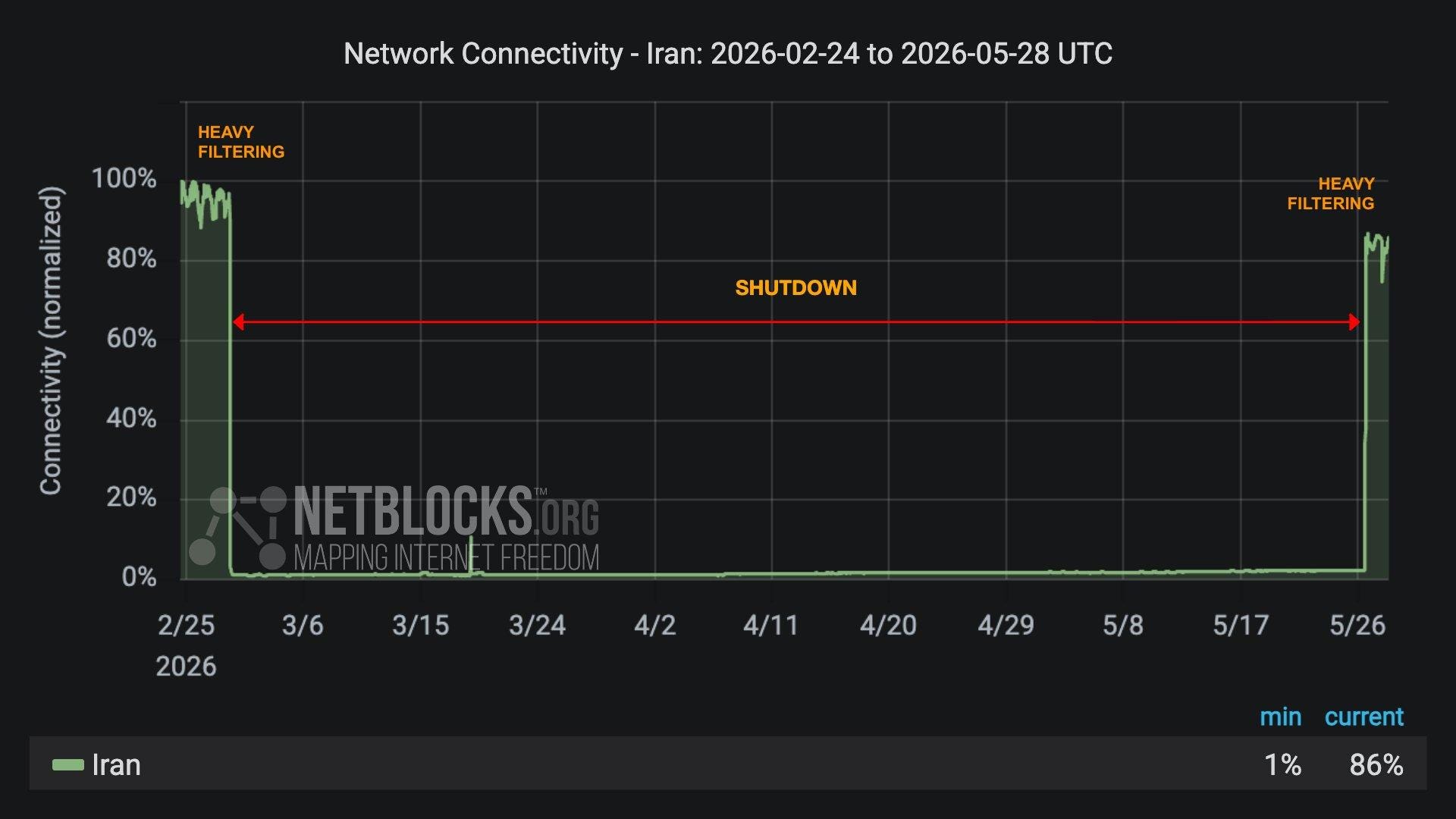
🚫 Several weeks after the end of Israeli–U.S. air strikes, internet access in Iran has not yet been fully restored, officially for security reasons.
🔍 According to an investigation by journalist Yashar Soltani, access has not been entirely blocked, but rather restricted and monetised, with availability dependent on users’ ability to pay. The investigation has been translated by Naghmeh Sohrabi on her Substack.
🌐 A 50GB package from Irancell (without full access to the global internet) costs around 400,000 toman, while “Internet Pro” from Hamrah‑e Aval, which includes full global access, costs approximately 2.5 million toman. The median monthly salary in Iran is about 4.3 million toman.
🦑 Hamrah‑e Aval is 90% owned by the Telecommunication Company of Iran, itself controlled by a consortium involving Setad (under the direct authority of the Supreme Leader) and an investment group affiliated with the Islamic Revolutionary Guard Corps (IRGC).
🤑 This arrangement suggests that segments linked to the IRGC may be extracting economic rents from restricted internet access, despite the significant damage to the broader economy and reported opposition from parts of the government.
🗼 Iran’s network structure, featuring a single central gateway between the domestic network and the global internet, enables authorities to restrict nationwide connectivity with relative ease.
🔓 According to Soltani, the government led by Pezeshkian opposed tiered Internet access, in contrast with the IRGC. On 25 May, it ordered the reopening of international Internet access, which however remains partial, at 40% of the levels recorded before the January protests.
⚠️ Why this matters
Limited Internet access entails severe economic damage, estimated at $30-$40mn per day in direct costs and as much as $70-$80mn per day when adding indirect effects. The Internet Pro scheme adds to costs for businesses and turns the Internet shutdown into a rent-seeking opportunity for the IRGC, whose security concerns apply only to those without the economic means to purchase access to the global Internet, revealing a regime increasingly detached from Iranian society. According to Sotabi, the government opposes tiered Internet access, against the regime’s security apparatus, highlighting significant political disagreements inside the regime itself. The government’s success in securing a partial reopening of Internet access may signal a tilt in the internal balance of power within the regime, highlighting the political limits of the hardliners’ approach.
📑 Dig deeper
📌 The investigation translated into English by Naghmeh Sohrabi in her Substack newsletter, which we recommend:

📌 Soltani’s original post in Persian:
https://tinyurl.com/nhym5dch
📌 Setad, or the Enforcement of Imam Khomeini’s Orders, is said to have tens of billions in assets at its disposal, without any government or parliamentary oversight: https://en.wikipedia.org/wiki/Execution_of_Imam_Khomeini%27s_Order
📌 The Mehr Eghtesad Iranian Investment Company, linked to the IRGC: https://www.iranwatch.org/iranian-entities/mehr-e-eqtesad-e-iranian-investment-company
📌 An estimate of the cost of the internet shutdown reported by Iran International:
https://www.iranintl.com/en/202604130318
📌 Project Ainita report dating from spring 2024: Quality of Internet in Iran - Analytical Report on Disruptions, Restrictions, and Internet Speed in Iran
https://ainita.net/Iran-Internet-jul-2024-v3-translated-EN.pdf
📌 Figures on average and median salary ranges in Iran. Unfortunately, we could not reach the website of the Statistical Center of Iran this time.
https://worldsalaries.com/average-salary-in-iran/
Connect the local and the global, the technical and the political, the event to the system.
Subscribe to phase:shift: grasp reality, so you can change it.
📣 Turkey’s Strategic Interests in Nigeria
Special thanks to Tommaso Ciurnelli for his contribution to this.
🇹🇷🇳🇬 On 18 April 2026, Turkey and Nigeria signed a defence agreement intended to counter the jihadist insurgency affecting parts of Nigeria. The deal includes the training of 200 Nigerian soldiers in Turkey and cooperation in the production of drones, a sector in which Turkey is a leading global supplier.
🤝🏻 This agreement is the latest in a series of bilateral initiatives between the two countries, building on a partnership that began in 2011 with an accord on the promotion and protection of reciprocal investments.
🛩️ In January, the two countries concluded a separate agreement aimed at reaching $5 billion in bilateral trade, alongside Nigeria’s purchase of six ATAK T129 helicopters and drones, and expanded Turkish investment in Nigerian infrastructure.
💰 On 2 April, the Turkish embassy announced a further $2 billion in planned investments, targeting key sectors including energy, technology, healthcare and agriculture.
🛢️ Nigeria is Africa’s largest oil exporter and Turkey’s third‑largest supplier, with annual trade in oil exceeding $380 million. The oil sector accounts for around 90% of Nigeria’s foreign‑exchange earnings and 30% of government revenues.
⚠️ Why this matters
Militant armed groups in Nigeria are a real threat, part of a broader instability affecting the large region from the Sahel to the Horn of Africa, taking several forms locally. Through these agreements, Nigeria is not only seeking to counter this. It sees this as a chance to address the structural weaknesses of its economy and attract capital to invest in key sectors. Turkey aims to strengthen its presence in the Nigerian market and further expand its influence in Africa by forging ties with the continent’s most populous country. Turkey has been emerging as a regional power willing to provide security and military support, presenting itself as an effective diplomatic mediator to ease international tensions or armed conflicts, and investing abroad at an unprecedented scale since the fall of the Ottoman Empire.
📑 Dig deeper
📌 The April 2026 agreement between Turkey and Nigeria.
📌 Relations between the two countries have long been close: as early as 2011, they signed a bilateral agreement on the mutual promotion and protection of investments.
📌 Energy exports between Nigeria and Turkey.
📌 The January 2026 agreement: in exchange for Turkish companies participating in infrastructure projects in Nigeria, Nigeria purchases military helicopters and drones from Turkey.
📌 The value of oil exports in the Nigerian budget, according to the Federal Budget Office.
📌 The International Monetary Fund estimates that oil accounts for 4% of GDP and the federal budget for 14% of GDP, meaning that 28% of budget revenue comes from the oil sector.
📌 Announcement of further investments by the Turkish ambassador to Nigeria.
If you know someone in research, policy, academia, or industry who could use our work, share phase:shift with them.
Be part of the early network.
📣 Closure of Hormuz and the Fertiliser Crisis
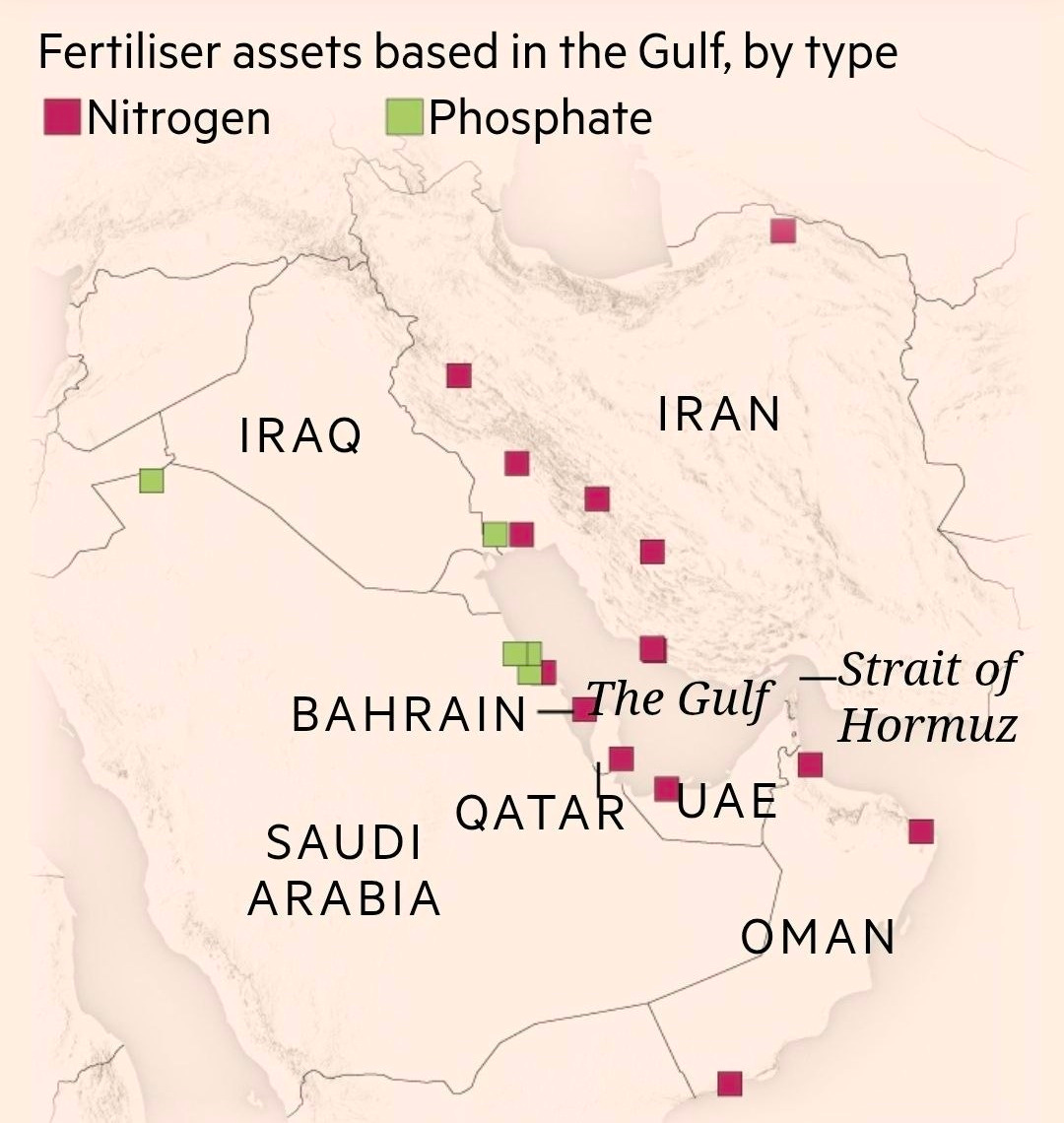
🧪 In addition to fossil fuels, the closure of the Strait of Hormuz is severely disrupting the fertiliser industry, which relies heavily on fossil fuels as inputs and is concentrated in the Middle East.
🚢 Many countries depend on supplies from the Gulf to sustain fertiliser production. In India and Pakistan, several plants have temporarily shut down or reduced output due to supply shortages.
🌾 The disruption is having the greatest impact on low‑income countries, where agriculture depends heavily on imported fertilisers. For instance, food prices increased by 25% in Somalia, a country already near famine due to drought and aid cuts. In general, fertiliser prices are set to increase by more than 30% in 2026, according to the World Bank.
🍚 In Southeast Asia, fertilisers from Hormuz are critical for rice cultivation, and producers are scaling back exports across Vietnam, Bangladesh and Thailand, adding to the food inflationary pressure.
💸 Advanced economies are also affected: in the United States, some estimates suggest inflation could rise from 2% to 4% due to higher input costs. Indeed, in June inflation already hit 3.8% due to higher energy, supply chain and agricultural prices.
🇷🇺🇨🇳 Russia’s and China’s fertiliser industry, among the largest in the world, would be the best placed to emerge as a key beneficiary of rising prices, especially because fertiliser exports are not subject to international sanctions.
⚠️ However, the export capacity is impaired by Ukrainian drone strikes hitting fertiliser plants and export terminals, as well as by a cap imposed by Russia to prevent domestic shortages.
⚠️ Why this matters
The blockade of the Strait of Hormuz matters well beyond energy, with significant consequences for fertilisers and therefore for the entire global agricultural sector. Rising input costs make agricultural production unsustainable in several regions, from Africa to Southeast Asia, directly reducing food supply as well. Higher energy and food costs contribute to strong inflationary pressure and food shortages in poorer regions, with devastating effects where famines are already unfolding, such as in Somalia and Sudan. In advanced economies, inflation still worsens social imbalances, reducing the disposable income of low-income households and dragging down consumption more broadly. Russia’s and China’s fertiliser industries are better positioned to benefit from these shortages, but much of the economic gain will have to be used to contain domestic imbalances. In Russia, the inflationary effect could also complicate the war effort in Ukraine.
📑 Dig deeper
📌 An in-depth Financial Times article. Gift article.
📌 Russia’s position in the fertiliser industry.
📌 An analysis of the Carnegie Endowment on Russia taking the lead and trying to capitalise on the disruption of the fertiliser market.
📌 This analysis by the European think tank ECFR notes that Russia does not have the material capacity to increase fertiliser exports. The Togliatti-Odesa pipeline, which moves ammonia to Black Sea export terminals, has remained offline since 2022; Ukrainian drone strikes often hit Russian fertiliser plants; and the Russian government has recently imposed strict caps on fertiliser exports to prevent domestic shortages.
📌 The catastrophic situation in Somalia, as reported by Reuters, International Crisis Group, and the New York Times.
📌 Another example is Sudan, where farmers are seeing an unusually expensive planting season as a result of the war in Iran.
📌 The World Bank forecasts a 30% increase in fertiliser prices in 2026.