



Welcome to Phase Reading, our monthly format where we explore a global trend in politics, technology, economy and society, or all of these together, when we want to follow the longer threads behind the news.
Today, we talk about Africa with Jeffrey Paller. Jeffrey is a Researcher in the Department of Government at Uppsala University and an Associate Professor of Politics at the University of San Francisco. He is involved in multiple projects across several countries, and he mainly focuses on democratic processes in emerging urban communities. He authored Democracy in Ghana: Everyday Politics in Urban Africa. Jeffrey and Phil curate This Week in Africa, an extremely valuable newsletter that we have been following for years, when phase:shift wasn’t even a thing. We warmly recommend following it.
In this interview, we discuss:
Shifting narratives about Africa
Giulio Fatti: Our first question is meant for our readership: why should we talk about Africa, why should it matter to our readers? Why should they open a newsletter, find information about Africa and be interested? And I say this knowing that Africa is not a country but a continent, including many different countries, with often deep differences, and obviously many different things going on.
Jeffrey Paller: Well, we are talking about 1.5 billion people, 54 countries, 350 million Africans living elsewhere in the world. I think in some ways it’s self-explanatory why we should care about such a large and significant continent. But what I try to do in my newsletter, and I think I try to do in all my research, is to centre Africa in the world rather than treat it as peripheral to the types of questions we care about Africa.
When we think about the next stage of the green energy revolution, we need African resources, African labour, African people. When we think about politics, so much attention is on immigration and the movement of people across borders right now. We can’t understand that without understanding what’s going on on the continent. Just consider a place like my hometown, Minneapolis, MN, which is in the news right now for American politics and immigration politics. We can’t understand what’s happening there without understanding what’s happening in Somalia and what’s been happening in Somalia for the last few decades, at least. I try to bring Africa to the centre of all the questions that we already care about, but taking it on its own terms.
Piero Lo Monaco: Thank you, Jeffrey. I like a lot your willingness to recentre Africa and treat it as centre rather than periphery. Would it be fair to say this kind of implies a phase shift? I was thinking that we are following a similar path: I guess we are doing something similar, just following other lines, and I think we can agree on many things regarding the way the world and the global trends should be read.
Your weekly roundup of Africa-related news and research works is very diverse, spanning across several fields. This gives a clear feeling of the extent to which all fields are interconnected. I’d like to know more about your approach, because you and Phil are certainly thirsty readers as much as, I guess, Giulio and I are, and you must have some way of selecting the news. How do you decide what to follow? What are your sources? And most importantly, what can we learn from such an interconnected approach?
JP: Yeah, I think one of the important things to note is that over the years there’s been a phase shift which has placed Africa in one of two boxes. One box was Africa as a problem and how to overcome the problems of the African continent, politically, economically, and to some extent socially with civil war and other things. Now there is a clear shift to thinking about Africa instead as an opportunity, for new ideas and for successful transformation. In a lot of ways, I think both of those boxes reduce the interesting dynamics on the continent. One thing I’m very clear about is: we don’t pick sides on whether we are going to only focus on the good things or bad things happening. We don’t take an editorial stance on that because quite frankly there’s a lot of good and bad and we can’t understand one without the other. We don’t fit into an “Africa in decline” or “Africa rising” narrative, but we try to focus on the political context in which all of these things occur. As a political scientist myself, the most important lens that I try to bring is understanding what political dynamics are behind the issues that we care about. We have different headings that come up every week, like the struggle for rights and freedom and Africa’s rapid urbanisation and the week in development.
These are aspects that we speak to every week because they’re fundamental to understanding African societies and cultures at this moment. We also try to feature some of the most important political challenges, struggles or opportunities of the time, whether it be elections, civil war, conflict, peace agreements, and to look at all of this through the lens of a political analyst. I don’t think we can understand technology without understanding the important political battles that are being fought. I don’t think we can understand urbanisation, something lots of people only think in terms of economic transformation or demographic change, without understanding the pressure that that places on societies, and how people now have to be living together in a smaller space, and what the implications of this are. All of the analysis that I do with Phil, who is a former student of mine but we’ve become colleagues in this endeavour, is to highlight the political context in which all of these things occur when it comes to which news to pick, balancing news sources from the continent with news sources from global media. Over the years, there’s been kind of an ebb and flow in which countries we focus on.
News outlets are featured due to some of the events and activities that are happening on the continent, but I also try to bring in international development scholars, practitioners as well as creatives working on the continent and in the diaspora themselves. This brings an important perspective that’s often lost in conventional analysis, with various features of different political analysts all over the world. The newsletter is geared toward government workers, development experts, political activists, foreign policy advisers, and professors and students. So as a political scientist and academic myself, there’s definitely attention toward scholarly literature and scholarly voices to kind of inform this analysis. When people read the newsletter, I hope they’re not just reading the newsletter, but they’re starting to see the different perspectives that they can turn toward. If you’re a journalist, you are exposed to new academic thinkers who you might want to reach out to. If you’re an academic, you might be introduced to new sources of data, et cetera.
PL: That’s clear. Thank you. There’s a lot of what you said that prompted me to ask other questions. You said there are some comments and analyses that could miss these interconnected aspects of reality. What do you think is misleading in the way Africa is sometimes described? What is misleading in the sources you find?
GF: If I can just add a little bit to that: you said that you try to strike a balance between Western and African local sources and it just came to my mind that a lot of the discourse in Western media is not determined by something going on on the continent, but by the political agenda in Europe or in the United States. For example, the last time we talked about Nigeria, it wasn’t because something was happening in Nigeria, but because the US president decided to go and do air strikes. So, how much of the discourse is determined by what happens here rather than what happens there?
JP: Yeah, so let me tackle this in a slightly different way. As a comparative political scientist, I try to think about how these issues might be reflected in the country, and I’m very aware of the different ways that global perspectives can shape domestic narratives. In my work, I try to expose that and provide a balanced account of both sides. Let me give you an example of our approach. Sudan has been covered in This Week in Africa for the last several years because they’re embroiled in this really deep civil war. Recently Anne Applebaum, a very well known and well-respected journalist, wrote a piece about “Sudan’s meaningless war”. And there was a lot of pushback from journalists and people on the ground about the framing of that narrative, that this is not a meaningless war. This is a very meaningful war. And there was a vibrant debate between The Continent, which is a source that tries to take African perspectives seriously, with Anne Applebaum’s account. What I like to do is provide both. I like to show that the kind of well-worn important analysts who have been framing Africa in a very specific way for a very long time are still a very important part of the story, but we need to balance it with other perspectives, to put that in the context of what this might mean on the ground.
In this new multipolar world, you’re going to see countries follow the Ethiopian model, the Rwandan model, which is one kind of political concern.
The second point I’d like to make is on issues that are just politically sensitive, and it’s often hard to know what the real story is. So if you take conflict in Ethiopia or conflict in Rwanda, there are very strong political leanings in each direction, and even academics in the West take different sides of this debate, with people writing from a more pro-regime perspective and others writing from a more pro-opposition perspective, even when this is not explicit. Again, I try to show both sides.
The third point I’d like to make is that I think that the role of the international community, the role of the West, is an important part of this story. I’m not trying to write how Africans in Goma relate to one another without considering the role that international mining companies might play or the proxy wars between various international interests. Do I leave certain perspectives out? Sure, if I read something that just doesn’t seem backed by evidence and seems only to be polemical. But if it’s a piece that is really important and does make an impact, even if I disagree with it, I try to foreground it. I try to explain why it’s being written about in that way through the voices of other people’s critiques. There is a debate taking place. If we take the DR Congo, how much of this war is being driven by local interest versus how much of it is being driven by international interest? How can we understand that debate? How do they relate? How do they interact? And what are different academics and foreign policy analysts and experts saying about this?
Does Africa foreshadow global trends?
PL: Of course. This is very similar to our approach. Now I have a question related to the strategic interest of following African politics and news: I started doing it about three years ago. My rationale was that Africa can anticipate trends that will eventually be more common in other parts of the world. We don’t really agree with Giulio about this, but this is my personal perspective. When we talk about climate change, this results in a lesser share of many resources, with major political, social, economic, and military effects. Things going on in Africa as they are happening nowadays can be a sort of prefigurative anticipation of what could happen in other parts of the world and can help us understand. For example, so many wars that are happening in Africa could be traced back to as an effect of climate change. What do you think about the possibility that Africa can anticipate trends? Do you have any thoughts? Is there any potential trend that you think Africa can anticipate?
JP: Yes, absolutely. Some of the trends we’re seeing globally right now, with the decline of democracy across the world and the reemergence of strongman politics, has been something that studying Africa feels very familiar to me in a lot of ways. And not to say that these countries are copying Africa, but in the last 30 years we learned how democracy really has to deliver better lives for a majority of people. When it doesn’t, strongman leadership can be very appealing. And not only can strongman leadership be appealing, it can also help countries’ economies. Ethiopia and Rwanda, which are likely to be some of the fastest-growing economies on the continent, are being celebrated as a model of good governance. There’s a new book coming out soon by Joe Studwell about how Africa works, and Ethiopia and Rwanda are centred as key examples of how Africa might work into the future. In this new multipolar world, you’re going to see countries follow the Ethiopian model, the Rwandan model, which is one kind of political concern.
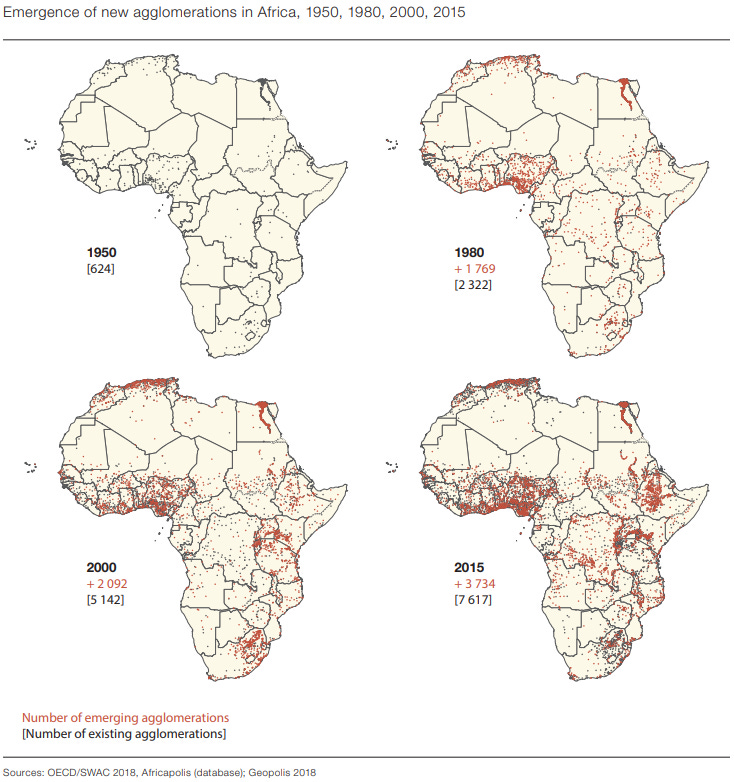
A few other trends when it comes to big structural things. Africa is urbanising at a large rate, transforming from a rural continent to an urban continent. This means that, of course, more people live in cities. But it also means that all the ways that we’ve been thinking about poverty and food security are going to be different. It means that we’re going to have to be fighting development with a focus on sanitation, with the focus on combating rising type 2 diabetes. It means to focus on creating jobs for poor urban workers rather than rural farmers. This is going to reset how we think about development in this context.
The third thing I would say is that a lot of the financial innovations now happening on the African continent have already been spread to the rest of the world. Mobile money was kind of innovated in Kenya, it is now important everywhere. There are interesting experiments in the transport sector that we might not be paying so much attention to, from ferries in Lagos to mini buses across the continent, rather than large scale railways. We can look to African cities, we can even look to different regional corridors about how Africans that are interacting with each other, are sharing money, are transporting one another. I think that’s an exciting avenue to pay attention to.
We need to think about the intensity of this demographic shift. It’s the fastest rate: the only other modern example of this is China, which has transformed from a rural-based to an urban-based society in such a short time period.
PL: I see, thank you, Jeffrey, very good points. You mentioned the contradiction between economic development, democracy and authoritarian regimes that are seen as key models of African development. I feel stupid, but I had not thought about these as an anticipation. The development of the economy being in contrast with democracy and resulting in more and more authoritarian regimes is actually a form of anticipation that tells us something about the rest of the world.
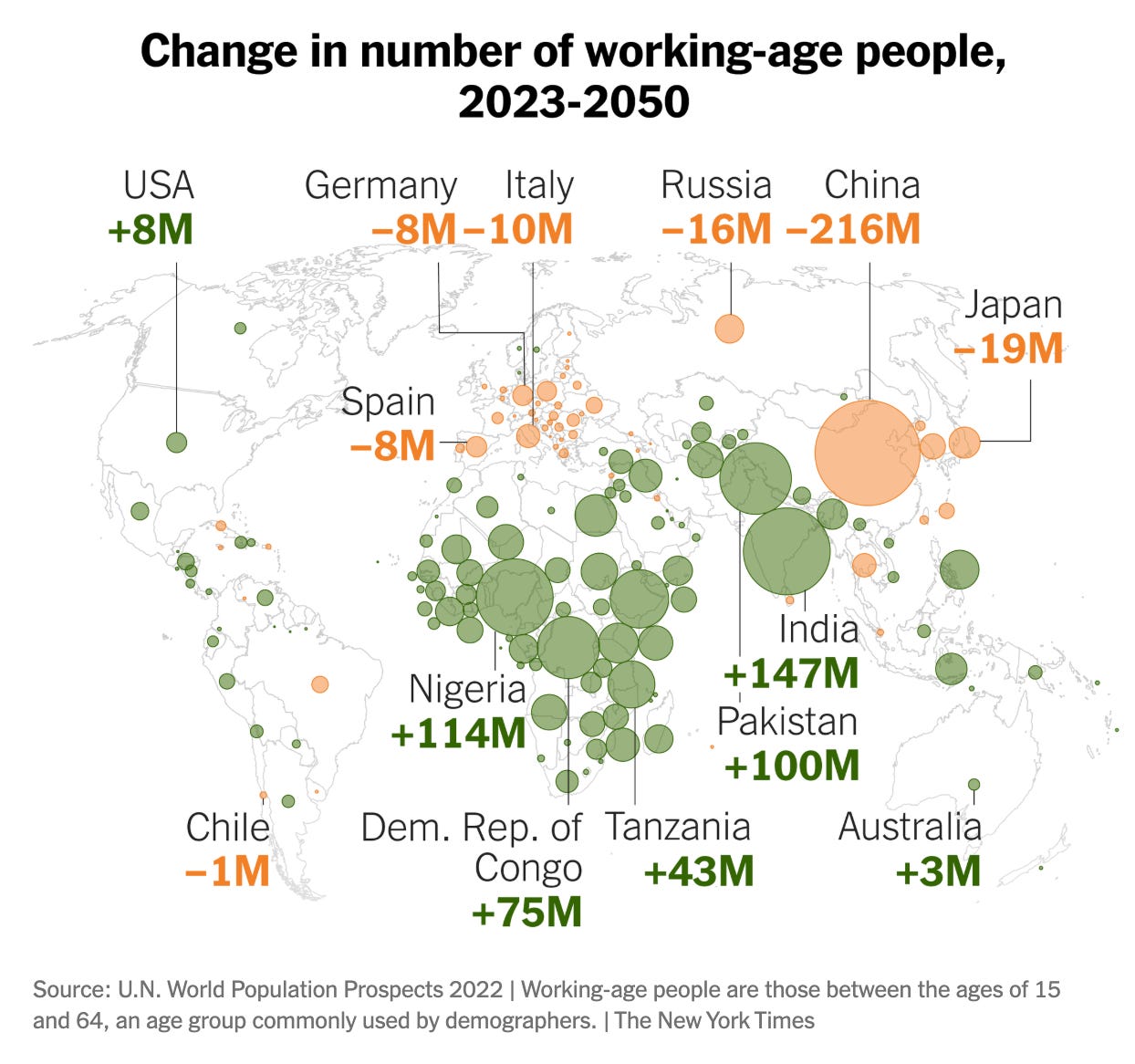
On the same line of thought, my next question is about demography. Africa is currently the youngest continent. In a couple of decades, if not earlier, an increasingly large share of the global workforce will be African. So maybe the implications of these demographic shifts for the continent and for the rest of the world are very logical, but better to state them explicitly. What are they?
JP: In the rest of the world, superpowers are facing declining birth rates. This is across Europe and the United States, but also across Asia, and Africa provides the opportunity for demographic growth. On the one hand, this is incredible potential for a labour force, a youthful labour force that can serve the needs of African countries, but also the needs of societies with declining birth rates elsewhere. We know that this is a hugely politically challenging environment as well, even places like Spain that have had very pro-migrant stances. When we think about how they incorporate African immigrants, there’s a different story with how they’re integrating people from Spanish-speaking countries. There’s at least a political debate around this. We need to pay attention to this issue. Domestically, this means two major things. One is that you have a lot more people being born, but as these countries are developing, there’s a lot more people being educated as well. So if you take places like Ghana and Senegal, there’s a lot of great universities and opportunities for young people to learn the necessary skills, but then when they graduate, there’s not enough jobs for them. I think the most important challenge that African governments face is how to create enough jobs for this booming population and that will stem the migration tide that’s really been an issue in the last 15-20 years or so to Europe and the United States, but it will also help develop these societies. I think the worry is that if this demographic boom does not come with job opportunities, there is a potential for a major crisis.
De-linking urbanisation and industrialisation
GF: Alright. So I wanted to ask you, what is the link between the very rapid urbanisation that is going on in Africa and industrialisation? In what way is the development of African economies going to be intertwined with urbanisation and the specific growth of African cities, also with all the regional and local differences?
JP: Historically, especially in the West, industrialisation is what drove urbanisation. People would move to cities because there were industrial jobs for them, and this is how the West really developed. This is not what has happened or is happening in the African context. In some ways it’s important to just de-link those two. We need to think about the movement of people, separate from the possible economic transformation that is happening. Some colleagues of mine, Sean Fox and Tom Goodfellow, call this “late urbanisation” and they argue that we need to think about the intensity of this demographic shift. It’s the fastest rate, the only other modern example of this is China, which has transformed from a rural-based to an urban-based society in such a short time period, 30 or 40 years.
It’s in a context of hyper-globalisation. In the 1820s and 1830s in Europe certainly there was globalisation, but not on the scale that we see today: the central nature of state politics and national politics in shaping these concerns, as well as the environmental, climate catastrophe possibility where this change is occurring. We need to think about the movement of people themselves. Of course, industrialisation is happening in some of these places, and of course there’s infrastructure development happening, but it’s not necessarily the reason that people are moving, and it’s not necessarily transforming in a classic sense like Africans from peasants to a middle class just because they moved to the cities and became educated and are now modern citizens.
It’s important to de-link that and treat every case on its own terms: different countries, different cities, even different-sized cities. How people move to a mega city is different from the opportunities they face in a secondary or a smaller city. That’s just an important point to make. I would also say that it all comes down to the local political conditions where people find themselves: democratic cities or countries or cities that have more opportunities for civic engagement, more of a say in developing their own housing, their own neighborhoods, their own kind of sustainable communities are different from a place where there’s a lot more top-down urban planning, a lot more eviction-led development, and these sorts of things. In my own work, I really pay attention to the different ways that local people and local communities adapt the prospects and opportunities rather than just industrialisation changing and transforming these people into new modern beings.
GF: To be honest, my reference model was Asia much more than Europe. Also, just for the sheer size of the cities, that in Europe are relatively small.
JP: Yeah, I mean one major difference, and I once wrote about this… what can African cities learn from the Chinese experience? There’s a lot of parallels, but some major differences are that the state strength is a lot weaker in most African cities and rights are a lot more ambiguous. These two things really are central to development and to Chinese development. We can’t understand Chinese development without understanding how they underwent this large institutional transformation with a really strong state and a really strong organised party that was able to shift land rights in a very specific, strategic way. Those things are less possible in most African contexts. So, it’s hard to just take what we learned in China or in Asia. There’s always this obsession: let’s copy what South Korea and Singapore did because they were at the same level of development back in 1960. Those trends did happen, and we can learn from Asian countries, but local conditions are so different that industrialisation won’t happen in the same way.
African energy challenges
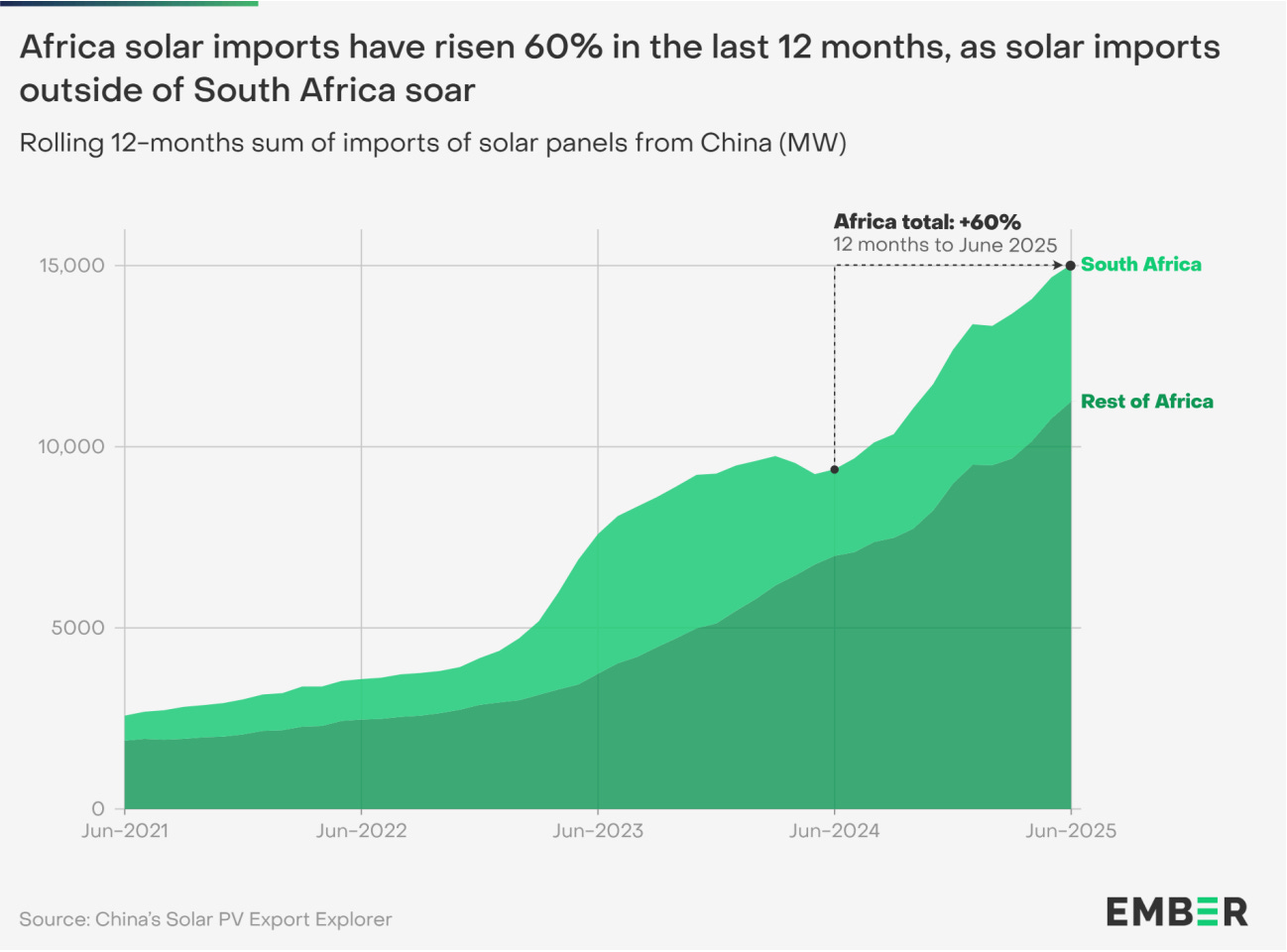
GF: Speaking of local conditions, I think there are trends where Africa can have its own specific development and growth. For example, what is the role of renewable energy in shaping and promoting urbanisation? In a previous Critical Point, we wrote about the solar boom in Africa, and a few days ago I read a wonderful story in Bloomberg about mini grids in Nigeria, and I thought it was so interesting because it’s not something that we’re seeing in Europe.
JP: I think from a household coping strategy level, renewable energies offer incredible opportunities for people to advance, from energy needs to get linked to the world and with family abroad, with mini grids where people have access to electricity in a way that they never did before. Internet connectivity is quite high. People have access to different financial markets in ways that they never had before. A lot of this is being driven by renewable energy sources and I think structurally there’s still a need for mass power generation at the national grid level. Every other country in the world has transformed its economy on the backs of non-renewable energy sources. It’s a little unfair if we ask African countries to kind of leapfrog what every other country in the world has done, just because we now have better knowledge of what non-renewable energies have on the world, and not asking the rest of the world to continue to limit their supply. So, there are three major things. First, I think renewable energy at the individual level offers new opportunities to people, but that’s not necessarily going to lead to any large-scale structural change. Second, African governments and economies need both renewable and non-renewable energy sources to improve, and that is a tough thing for the international community to come around to. It’s not satisfying but it’s unfair to ask some countries and some continents to fully transition at the stage that they’re at without doing it enough to curb those submissions themselves. Third, and this is what gets a lot of attention is that in a lot of ways, African resources and minerals are going to drive so much of the green energy transition elsewhere in the world and this is going to affect African populations, African societies, sometimes for the good. You’re going to see countries that have stronger political institutions, a better rule of law, kind of benefit from the commodity boom that they’re likely to see in the next 5 or 10 years. But countries that are less politically strong, less accountable to their people, are going to continue to suffer the resource curse. This is what you see in places like Guinea and the Democratic Republic of Congo and just kind of mixed evidence in Nigeria, where historically it’s led to incredible corruption, but today the Nigerian government has a lot more experience negotiating fair contracts with international companies and international states that they actually have a little bit more bargaining power than we’re sometimes led to believe. So I would say renewable energy is important: it should be central to Africa moving forward, but it’s part of the broader energy space. And we haven’t even talked about AI and data centres and the need for water generation and all of these other things that are just necessary to develop African societies.
GF: To be honest, I didn’t think about data centres because in most countries I’m not sure that there is a grid capable of supporting the energy needs of data centres as there is in other areas.
JP: I haven’t looked into this. I imagine there’s potential, but we also know that it is not necessarily a good thing? You know, it should be driven by the needs of each society, not by just a kind of exploitation from the West.
PL: Well, for the time being they’re training a lot of people in the fields of AI and data centres, probably if they don’t have the infrastructure yet, this would imply that, to come back to a couple of questions ago, this creates a source of global workforce to export to countries or to regions of the world that have the infrastructure. But if they are investing a lot of money in training people, but still they lack the energetic infrastructure, this will lead somewhere and we will see what this gives.
Recommendations
GF: So, we’ll switch gears a little bit. In your post about 2025 trends, you wrote a section to remember journalists, scholars, politicians, writers and figures who passed away during the year. Would you like to take a moment to say some words about them, let the readers familiarise themselves with them and possibly honor their memory?
JP: Sure. There’s a few academics who have been really influential. One is a colleague and friend of mine, Kimuli Kasara, who was a political scientist at Columbia who passed away. She really broadened our understanding of how local populations experience ethnic diversity in their local contexts. How people of different language groups live together in small spaces, She really broadened our understanding of when people feel threatened by others, and when they do not. We can learn a lot from Kimuli’s work. Her analysis around identity in everyday local spaces is something that we really will miss.
The second academic is James Ferguson, who wrote a very influential anthropological study called the Anti-Politics Machine. What he was doing was to look at the role of NGOs in southern Africa and how they depoliticise development. The main takeaway here is that we have to think about development as a political issue, where there are winners and losers. The “good governance” agenda, the kind of technocratic approach of “let’s just develop societies but not think about who might be benefiting” is not helpful. International Development as a field is in a lot of ways really under threat, and I think a lot of critiques from a very different angle came from anthropologists like James Ferguson.
Renewable energy is important: it should be central to Africa moving forward, but it’s part of the broader energy space.
Finally, on the political front, I think it would be hard not to remember Raila Odinga, who was an incredibly important opposition figure in Kenya. He represents post-colonial history, post-colonial development in Kenya, but also offers lessons for opposition figures across the continent.
GF: Thank you, Jeffrey. Let’s close with recommendations. If there is anything you’d like to recommend to our readers, not necessarily related to Africa?
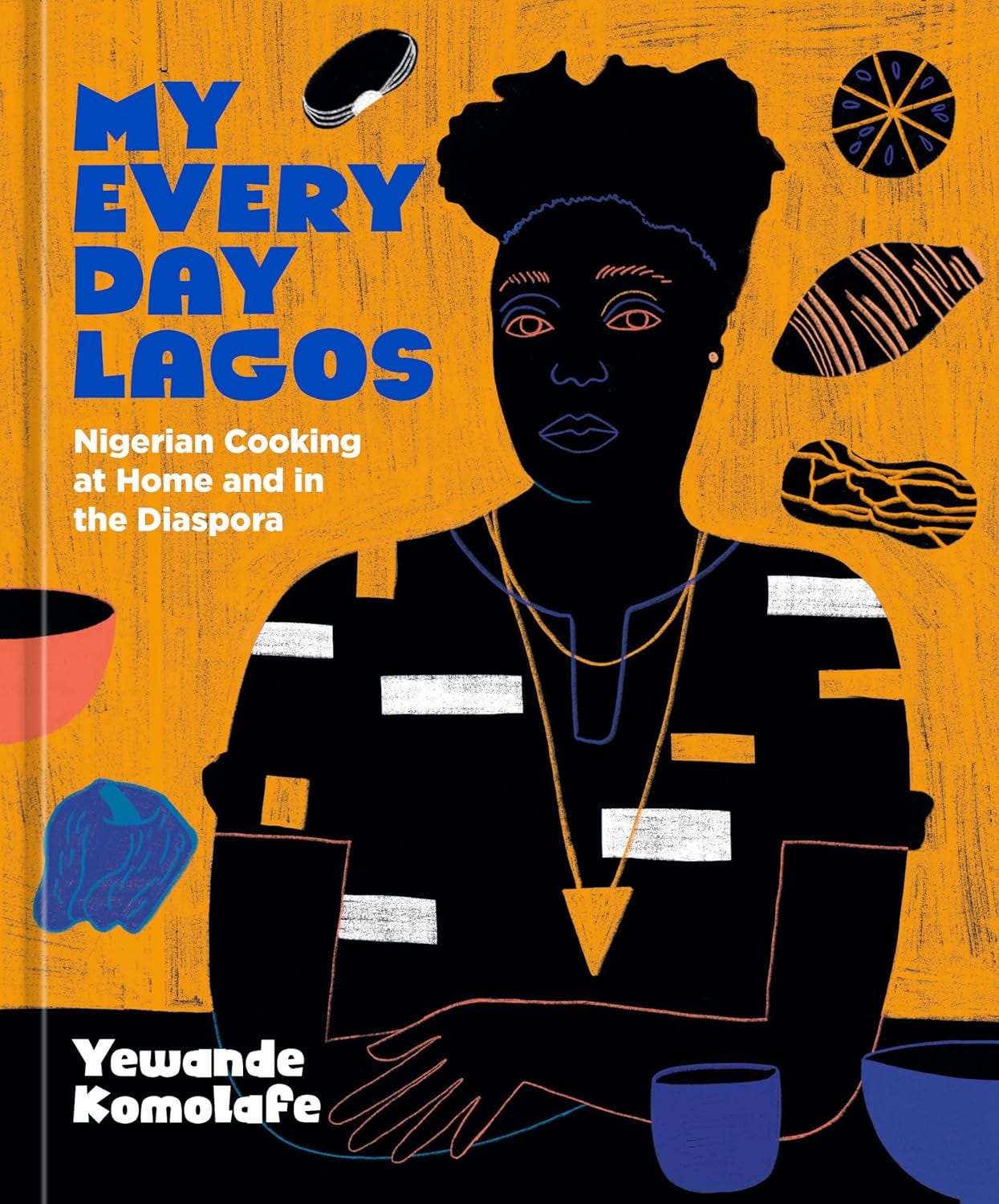
JP: I’ll keep them Africa-focused: I’ve been having a great time reading Africa Unbound, which is Kim Chakanetsa’s Substack, bringing together creatives, artists, musicians from all over the African diaspora and the continent. It’s opened up my eyes to the different ways that Africans are reshaping global culture. On a similar note, I love African food and I love to see it being taken seriously on the global food scene. I get a lot of my recipes from Yawande Komolafe, who is a recipe developer at the New York Times. She also wrote a wonderful book called My Everyday Lagos. Anytime I need some ideas about how to prepare some Jolof, I turn to Yowanda and she also has a very wonderful feature about her life and her recent story of refinding herself in the kitchen that I encourage everyone to look at. And then I love reading Peace Adzo Medie’s books Night Bloom and His Only Wife are some of my favourites. She’s a political scientist, but she’s also a novelist and really a beautiful writer about the everyday African experience. I encourage everyone to check out those books. What’s really exciting about this is that in a lot of ways, whether it’s food, textiles and clothing, music, Africa is at the forefront of the interesting creations happening globally. We’ve come a long way since Paul Simon had to find or discover Lady Smith Black Mambazo. Africans are everywhere, and quite frankly, I’m just learning a lot from everyone.
PL: Yeah, which makes sense because being the youngest continent, this gives a different, innovative vibe. Probably this is the reason why. That’s brilliant and very good to know, thank you especially for the recipe book!
GF: Just a curiosity: how spicy do you eat?
JP: I have young kids right now. Unfortunately for my recipes, I have to keep out the spice in those dishes, but I would say middle spice. I’m not too crazy. When I’m on the Continent, I just have to be careful cause I don’t want my stomach to hurt all day. And then when I’m at home, I want my kids to at least be able to try jollof rice and see if they like it.
PL: That’s so cool. Where have you been on the Continent?
JP: I’ve been going back and forth to Ghana for almost 15 years. My first book was about Ghana. Now I’m doing more work in Lagos, Nigeria, so I’ve been going back and forth there a few times. Then I lived in Kenya for a year. My wife was doing her field research there. I’ve mostly been to Anglophone democracies: Kenya, Ghana, Nigeria, South Africa. But I’ve spent time in Uganda and Botswana as well.
PL: That’s a nice and broad tour, with so much to see. Brilliant. Thank you very much for joining us, Jeffrey. Enjoy the Swedish winter and the African recipes!
JP: Well, I will! Thanks for having me.
Bravi! Bellissima analisi